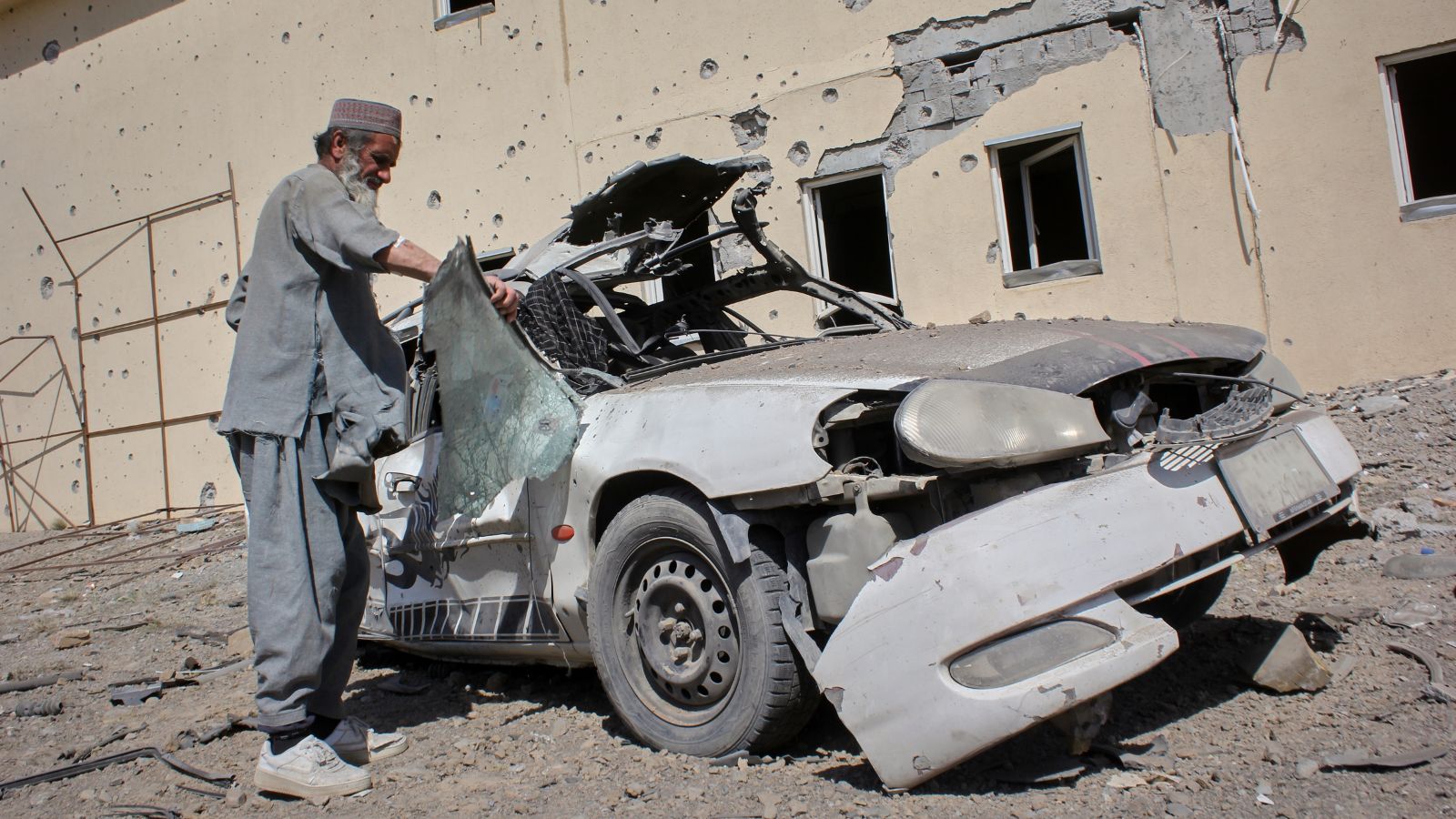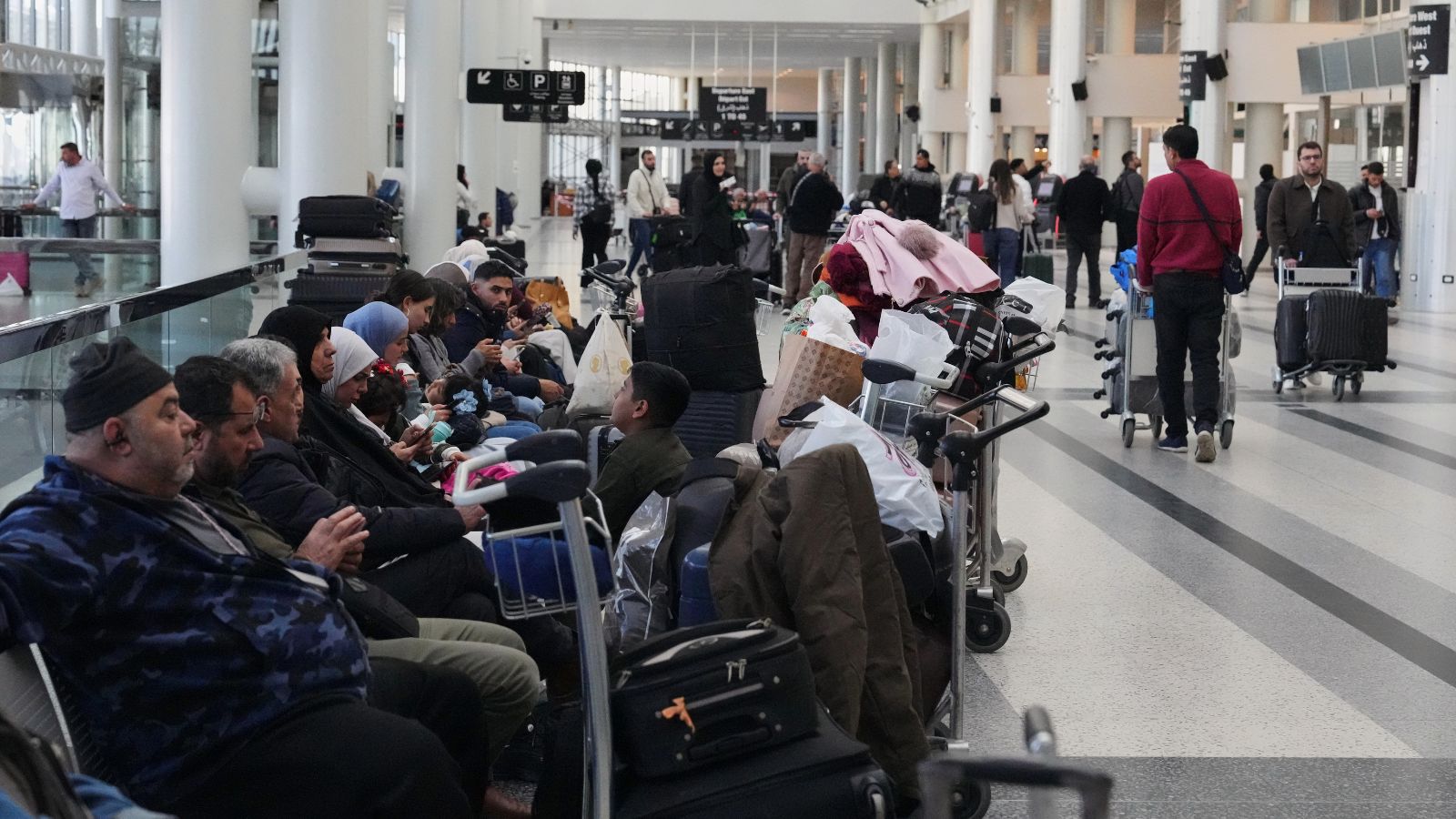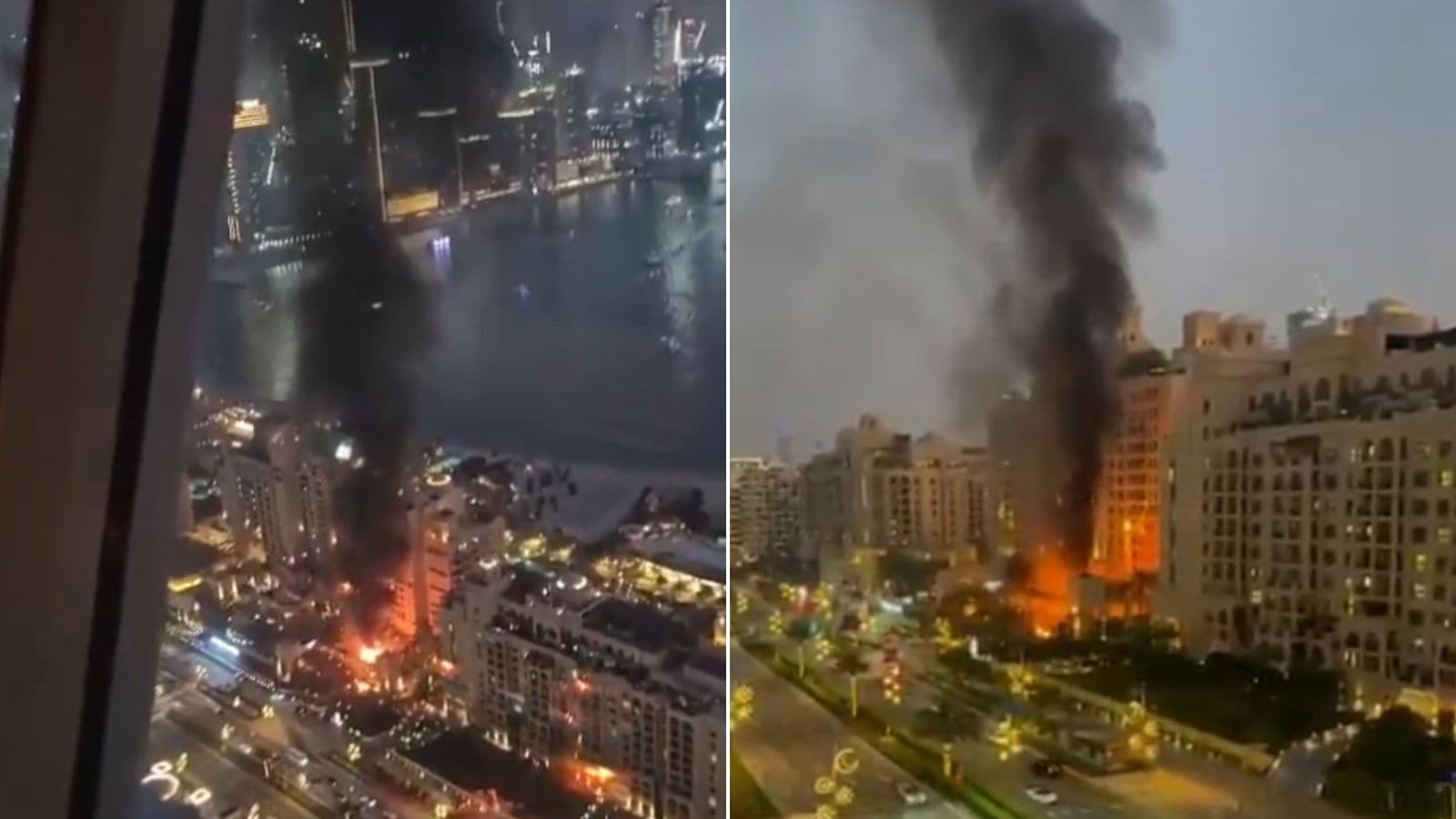
A peaceful evening on Dubai's iconic archipelago turned into a scene of structural damage and medical emergencies when missile debris impacted a residential building on Palm Jumeirah. Four people are now recovering from injuries. This isn't just a headline. It’s a wake-up call for high-density luxury developments in the region. When we talk about the "safety bubble" of the UAE, we usually mean low crime or financial stability. We rarely discuss the physical vulnerability of glass-heavy architecture to falling shrapnel from intercepted aerial threats.
The incident occurred during a period of heightened regional tensions. While the UAE’s defense systems, including the Terminal High Altitude Area Defense (THAAD) and Patriot batteries, are incredibly effective at neutralizing incoming threats, physics doesn't just disappear. What goes up must come down. In this case, the "down" was a high-end apartment complex.
The Reality of Interception Shrapnel
Modern air defense is a miracle of engineering. It’s an "impact to kill" technology designed to vaporize or shred a target in mid-air. However, gravity remains undefeated. When a multi-ton missile is intercepted at high altitude, the resulting debris field can span several kilometers. Palm Jumeirah, with its massive surface area and proximity to the coast, is a statistically likely landing spot for coastally-intercepted objects.
The four injuries reported were primarily caused by secondary effects. Think shattered glass and falling masonry rather than a direct hit by an intact warhead. In a building made almost entirely of floor-to-ceiling windows, even a small piece of metal traveling at terminal velocity becomes a catalyst for disaster. It doesn't take a direct hit to cause a casualty. It just takes one blown-out pane of tempered glass in a living room.
Why Glass Is the Enemy in Aerial Incidents
You love the view. I love the view. But from a structural safety standpoint, the architectural trend in Dubai of using massive glass curtain walls is a liability during kinetic events. Most of these buildings use laminated or tempered glass, which is designed to crumble into dull cubes rather than sharp shards. That's great for a stray football. It's less effective when a kinetic shockwave from a nearby explosion or a piece of heavy debris hits the facade.
The energy transfer from a falling piece of specialized alloy—common in missile casings—can easily overwhelm the structural integrity of a standard window frame. Once the envelope of the building is breached, the internal pressure changes. This often leads to more glass failing. It’s a chain reaction that happens in milliseconds.
Assessing the Dubai Defense Umbrella
The UAE has one of the most sophisticated integrated air defense networks in the world. They’ve invested billions in a multi-layered shield. You have the long-range THAAD for high-altitude threats and the Patriot PAC-3 for lower-tier intercepts. Recently, they’ve added the South Korean M-SAM system to fill the gaps.
People often ask why the debris isn't "steered" away from populated areas. The truth is, you can’t steer a cloud of jagged metal. Once the intercept happens, the trajectory is dictated by wind, mass, and velocity. The defense systems prioritize the "kill" over the debris path because an intact warhead hitting a target is infinitely worse than shrapnel hitting a roof. It’s a grim but necessary calculation.
Emergency Response and Infrastructure Resilience
The response at Palm Jumeirah was lightning-fast. Dubai’s emergency services—the police, ambulance, and civil defense—are trained specifically for high-rise incidents. They cleared the building and secured the perimeter within minutes. This rapid mobilization is likely why the injury count stayed at four.
However, this event highlights a need for better "shelter-in-place" protocols for residents. Many people's first instinct is to run to the window to see what the noise was. That’s the most dangerous place you can be. If you hear an explosion or the low rumble of an intercept, you move to the core of the building. The bathroom or a central hallway with no windows is your best bet.
Protecting Your Space in a High Rise
If you live in a skyscraper, you aren't helpless. You can't stop a missile, but you can mitigate the risk of injury from debris. It starts with understanding your building’s layout. Most modern towers in Dubai have a reinforced concrete core where the elevators and stairs are located. This is the strongest part of the structure.
- Install high-spec security film. This is a clear laminate applied to the inside of windows. It holds the glass together even if it shatters, preventing it from spraying into the room.
- Identify your safe zone. Find the room in your apartment with the fewest windows. Usually, this is a powder room or a laundry closet.
- Keep an emergency kit near the core. If you have to stay in your safe zone for an hour, you'll want water, a power bank, and a basic first-aid kit for cuts.
The psychological impact of debris falling on a landmark like Palm Jumeirah is significant. It pierces the veil of invulnerability that luxury real estate often promises. But being informed is better than being anxious. The UAE's defense systems did their job. They prevented a catastrophe, leaving us with a manageable, albeit scary, cleanup.
Moving Toward Hardened Urban Environments
Architects and developers might need to rethink the "all-glass" aesthetic for future projects. We’re seeing a shift in some global cities toward "hardened" residential design. This doesn't mean living in a bunker. It means using smarter materials and recessed windows that offer natural protection from falling objects.
For now, the responsibility falls on the individual and the building management. Regular drills aren't just for fire safety anymore. They should include "kinetic event" protocols. Knowing which stairwell to use and having a pre-determined meeting point away from glass facades can save lives.
Check your windows. Locate your building’s structural core. Make sure your balcony furniture is heavy or secured so it doesn't become its own brand of debris in a shockwave. Don't wait for the next siren to figure out where your shoes are. Be ready now.