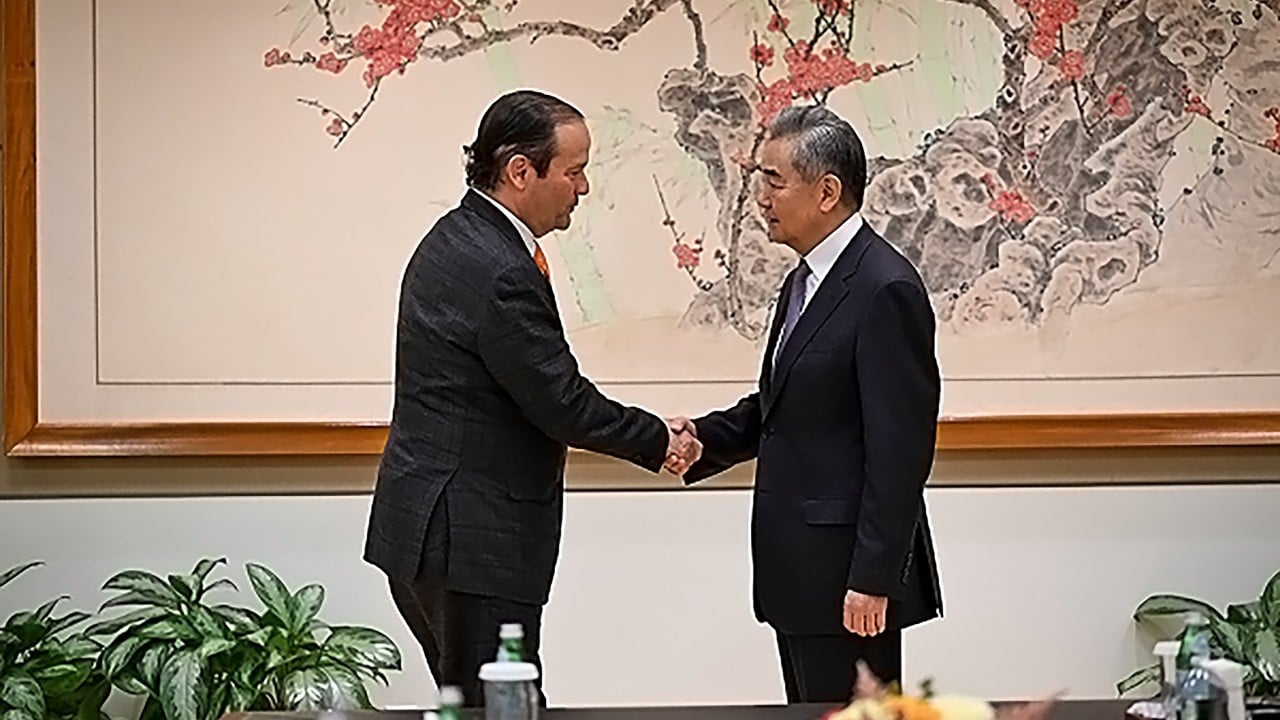
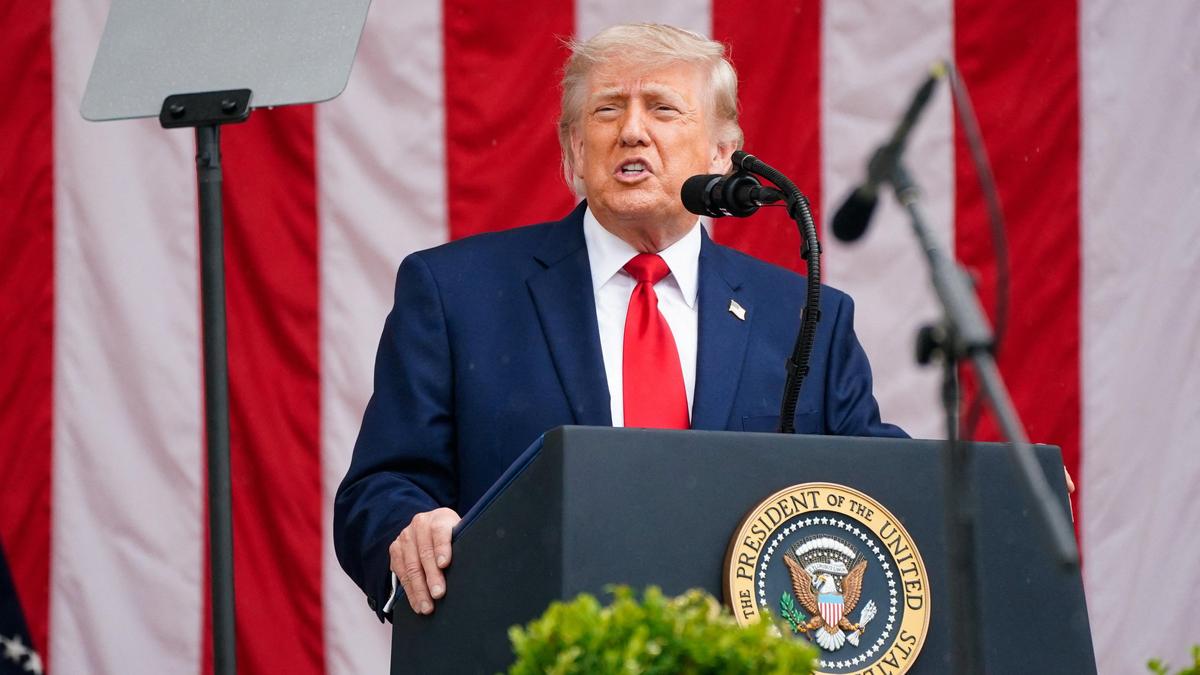
Texas Attorney General Ken Paxton has shattered the traditional power structures of Texas politics, defeating four-term veteran U.S. Senator John Cornyn in a Republican primary runoff that leaves no doubt about who owns the state party. The decisive victory, powered by a late endorsement from Donald Trump, ends more than 30 years of Cornyn's electoral dominance. This was not a standard political realignment. It was an institutional execution.
For decades, Texas Republicanism was defined by corporate boardrooms, institutional stability, and a reliable pipeline of country-club fiscal conservatives who viewed governance as a transactional business. Paxton's victory, capturing 64 percent of the runoff electorate, signals the absolute erasure of that era. The immediate problem facing the party is no longer just about whether factions can reunite for November. The real issue is that the old guard has been thoroughly liquidated, leaving an aggressive, insurgent wing to defend a statewide ticket against a highly motivated, extraordinarily well-funded Democratic opponent.
The Mechanized Retribution of Ken Paxton
To understand how a state attorney general with years of lingering legal scandals just unseated one of the most powerful institutional figures in Washington, one must look at the mechanics of the Texas primary runoff. Runoffs are low-turnout affairs driven almost exclusively by ideological purists. Cornyn entered the race with a massive corporate war chest and the institutional backing of the Washington establishment. Money, however, could not purchase immunity from the charge of insufficient zeal.
Cornyn’s sins, in the eyes of the modern Texas GOP base, were structural. He voted for a bipartisan gun safety bill following the Uvalde school shooting. He occasionally voiced mild, institutionalist criticisms of Donald Trump. He operated like a traditional Ronald Reagan conservative in an era that demands total culture-war mobilization.
Paxton weaponized these vulnerabilities with absolute precision. Rather than running a defensive campaign focused on his own controversial tenure, Paxton framed the race as a binary choice between localized populist resistance and Washington capitulation. The strategy worked because the ground had already been prepared by years of internal purging within the state legislature.
The campaign followed a template perfected during previous primary cycles. In recent years, Texas has seen an unprecedented wave of incumbent challenges. State leaders used the 2024 primary cycles to systematically target rural and moderate Republicans who blocked signature legislative priorities like private school vouchers or supported Paxton's short-lived impeachment. By the time Cornyn faced the voters, the institutional firewall that once protected establishment figures in Texas had been thoroughly dismantled from the bottom up.
The Illusion of a Uniform Party
National observers frequently treat the Texas Republican Party as a monolith, a safe-red juggernaut capable of absorbing internal friction through sheer demographic weight. This is a profound misunderstanding of the state’s political reality. The Texas GOP is not a unified organization; it is a battleground where two distinct philosophies of power are locked in a zero-sum conflict.
On one side is the remnant of the business establishment. This faction, long represented by figures like Cornyn and various rural institutionalists, views state government as a mechanism to facilitate economic growth, protect oil and gas interests, and maintain a predictable regulatory environment. They see aggressive social legislation as a distraction that threatens corporate relocations and economic stability.
On the other side is the ascendant populist wing, directed by Paxton and Lt. Gov. Dan Patrick, and heavily financed by West Texas oil billionaires who view politics through an ideological lens. To this faction, corporate satisfaction is secondary to absolute cultural dominance. They view traditional legislative compromise not as statesmanship, but as treason.
TEXAS GOP FACTIONAL SPLIT
┌─────────────────────────────────┐     ┌─────────────────────────────────┐
│     THE OLD ESTABLISHMENT       │     │     THE ASCENDANT POPULISTS     │
├─────────────────────────────────┤     ├─────────────────────────────────┤
│ • Focus: Commerce & Stability   │     │ • Focus: Ideological Purity     │
│ • Base: Suburbs & Business PACs │ vs. │ • Base: Rural Activists & MAGA  │
│ • Strategy: Institutionalist    │     │ • Strategy: Scorched-Earth      │
│ • Exemplar: John Cornyn         │     │ • Exemplar: Ken Paxton          │
└─────────────────────────────────┘     └─────────────────────────────────┘
This internal war means that the traditional concept of party unity is dead. When Paxton calls for unity following his primary victories, he is not offering a compromise to the defeated establishment. He is demanding unconditional surrender.
The immediate casualty of this approach is the party's infrastructure. Corporate donors who previously wrote massive checks to the Texas Republican Party are increasingly reluctant to fund an organization that openly attacks their economic interests. The traditional fundraising mechanisms that Cornyn anchored for decades are disappearing, replaced by localized, small-dollar networks and a handful of mega-donors who demand strict adherence to a specific ideological agenda.
The Democratic Calculus in November
Democrats have watched this internal bloodletting with quiet optimism, believing that Paxton's victory presents them with their best opportunity to break the GOP’s thirty-year grip on statewide office. Their nominee, State Representative James Talarico, represents a sophisticated shift in Democratic strategy.
Talarico is a 37-year-old Presbyterian seminarian and former public school teacher. He does not fit the profile of the standard progressive activist that Texas Republicans have successfully demonized in past cycles. Instead, Talarico utilizes religious language to argue for economic justice, public education funding, and institutional ethics. He is an exceptionally disciplined fundraiser who raised millions of dollars even before Paxton secured the nomination.
Within minutes of the race being called, Talarico’s campaign launched an aggressive media blitz labeling Paxton as the most corrupt politician in America. The strategic goal is obvious. Democrats know they cannot win Texas by mobilizing progressive voters alone. They require a significant defection of moderate suburban Republicans and independents who are exhausted by the ongoing civil war within the GOP.
"The calculation here isn't about shifting Texas to the left," notes an Austin-based political strategist who requested anonymity to speak candidly about both campaigns. "It's about whether the suburban voters in Collin, Denton, and Fort Bend counties—voters who supported Cornyn for decades—will simply stay home or cross over when presented with a choice between an institutionalist Democrat and a populist firebrand."
Paxton’s vulnerability in a general election is real, but it is routinely overestimated by national commentators. He has been indicted, impeached, and investigated by federal authorities, yet he continues to win statewide elections. The populist base views these legal challenges not as evidence of wrongdoing, but as confirmation that Paxton is effectively fighting the institutional establishment. Every legal assault reinforces his narrative of martyrdom.
The Suburban Decoupling
The ultimate battleground for the general election lies in the rapidly changing suburbs surrounding Houston, Dallas, and Austin. These areas were once the bedrock of the Republican majority, delivering massive margins that overwhelmed the Democratic urban centers. Today, they are highly volatile.
The voters migrating to these suburban developments are often corporate professionals attracted by Texas’s business climate. They are fiscally conservative but socially moderate. They are not driven by the same ideological grievances that motivate rural primary voters. When the state party prioritizes high-profile culture wars over infrastructure, public school funding, and predictable governance, these voters begin to detach from the brand.
We saw early indicators of this decoupling in the primary results. Even as Paxton won convincingly statewide, certain suburban precincts showed a lingering resistance, with voters openly stating they supported Cornyn simply out of a desire for stability. The risk for the GOP in November is that these voters will choose to protect their local economic interests by rejecting a top-of-the-ticket nominee they view as unpredictable.
To counter this, Paxton's campaign will rely on the absolute nationalization of the race. By framing the contest not as a referendum on his personal conduct or state-level policies, but as a critical defense of Texas against national progressivism, he can trigger partisan loyalty. In a general election, the tribal pull of the party ticket remains an incredibly powerful force, often overriding individual reservations about a candidate's ethics.
The Permanent Inversion of Power
The transformation of Texas politics is now complete. The old establishment is not coming back to save the party, because the mechanisms they used to maintain control have been dismantled. The corporate boardrooms have lost their veto power over the nominating process.
This reality creates a highly volatile environment for November. The populist wing has proven it can win primaries with ease, but it has done so by burning the very bridges required to build a broad general election coalition. They are betting that the changing demographics of Texas can be overcome by maximizing turnout among an intensely motivated rural base and exploiting national partisan polarization.
It is a high-stakes gamble that leaves no room for error. If Paxton wins in November, the transformation of the state will be locked in for a generation, signaling to every ambitious politician in the country that institutional norms are completely obsolete. If he loses, it will vindicate the long-ignored warnings of the old guard, proving that a major political party cannot survive indefinitely on a diet of pure retribution. The outcome will not be decided by appeals to unity, but by which side can more effectively exploit the deep, structural fractures of a state that has outgrown its old political definitions.