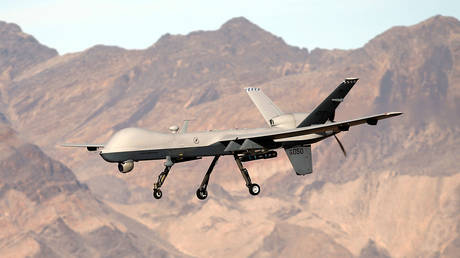
The United States military has quietly lost at least 45 MQ-9 Reaper drones during the ongoing conflict with Iran. That figure represents roughly a quarter of the entire active American fleet. When you break down the numbers, the reality is stark. These high-altitude reconnaissance aircraft cost between $30 million and $50 million each depending on their configurations. That puts the total price tag for the missing airframes north of $1.3 billion.
If you're wondering how the Pentagon managed to burn through a quarter of its premier strike drones so quickly, the answer comes down to modern contested airspace and mismatched operational strategies. Let's look at why these expensive assets became sitting ducks.
The Vulnerability Problem in the Strait of Hormuz
Most of these losses happened over or near the Strait of Hormuz. It's a critical chokepoint and a major flashpoint. The problem is that the MQ-9 Reaper was never designed for high-end electronic warfare against a capable, integrated air defense network.
Reapers fly relatively slowly. They operate at predictable, often low altitudes when conducting persistent surveillance and targeted strikes. Against insurgent groups in places with zero radar defense, that profile works fine. Against Iranian radar networks and regional proxy groups equipped with surface-to-air missiles, it's a liability.
U.S. officials familiar with Pentagon data have confirmed that enemy fire didn't account for every single loss. Some aircraft simply crashed after operators lost their communications links due to heavy jamming. When electronic warfare environments get dense, keeping a remote pilot connected halfway across the world breaks down.
The Strain on Military Stockpiles
This isn't just about losing forty-five airplanes. It's about a broader logistics crisis. Before the conflict kicked off, the entire U.S. military maintained roughly 185 Reapers. That included 165 in the Air Force and 20 assigned to the Marine Corps. None of the Marine units deployed in the Asia-Pacific have taken losses, meaning the entire attrition hit the Air Force inventory head-on.
By May, senior military leaders like Air Force Lt. Gen. David Tabor were already telling the Senate that the remaining fleet had dropped to about 135 operational airframes. That creates an immediate operational squeeze. The Pentagon has to balance active combat patrols against Iran with global commitments and training pipelines.
To make matters worse, other high-end weapon inventories are feeling the pinch. During the opening weeks of hostilities, U.S. forces chewed through hundreds of precision munitions, including Patriot and THAAD interceptors alongside Tomahawk cruise missiles. Manufacturing capacity simply can't keep pace. For instance, independent analyses from organizations like the American Enterprise Institute show that building replacement THAAD interceptors at current factory maximums would take decades to fulfill current Pentagon requests.
Where Defense Procurement Goes From Here
The Pentagon is already planning to phase out the General Atomics-produced Reaper. The military wants a cheaper, more expendable replacement fleet. Think smaller, armed surveillance systems capable of swarming targets rather than relying on a handful of exquisite, multi-million-dollar platforms that are too costly to lose in high numbers.
Until those next-generation systems move from drawing boards to actual deployment, commanders have to adjust tactics and conserve what remains. The math of modern warfare has shifted. If you rely on expensive legacy tech in a war against a defended adversary, the bill comes due fast.