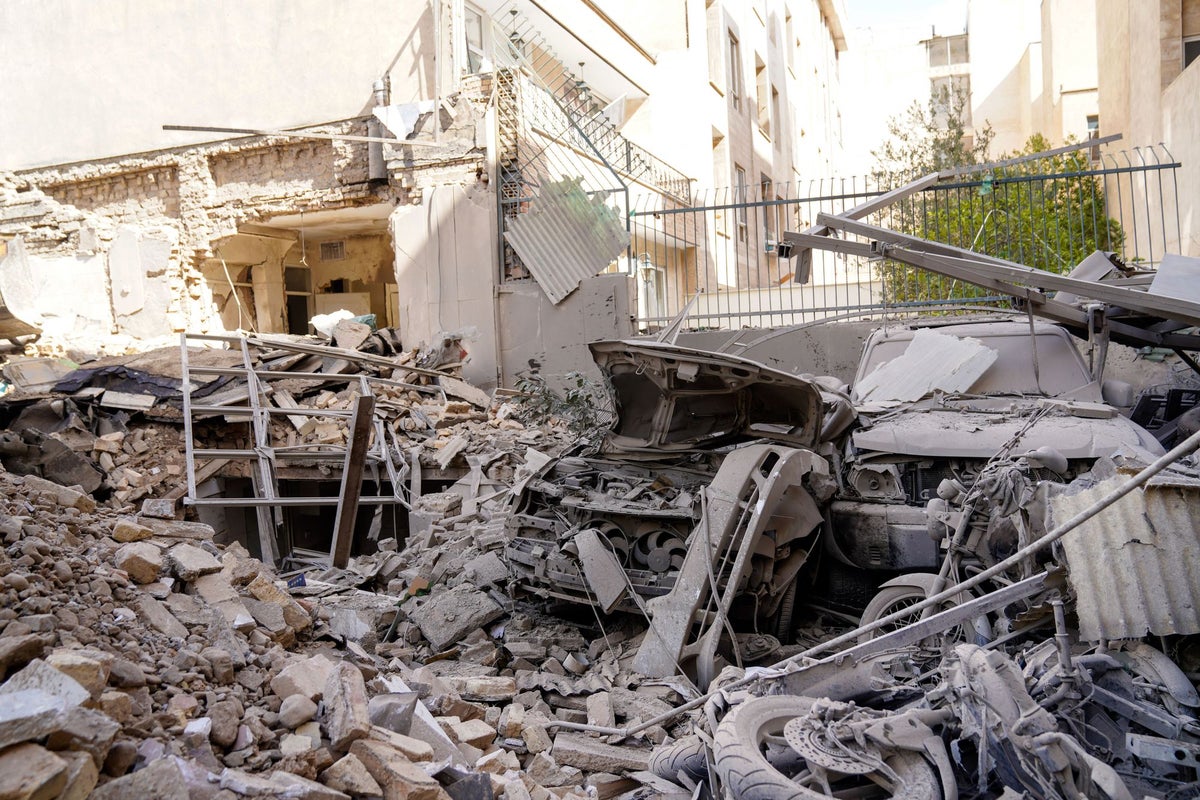
Direct kinetic action against the Supreme Leadership of the Islamic Republic of Iran (IRI) represents the terminal point of the "escalation ladder," transitioning a theater from gray-zone competition to an existential state conflict. When Western or regional powers target the apex of the clerical-military structure—specifically Ayatollah Ali Khamenei—they are not merely removing a head of state; they are initiating a systemic collapse of the Velayat-e Faqih (Guardianship of the Jurist) governance model. This strategy assumes that the decapitation of the leadership creates a power vacuum that the Iranian State cannot fill, yet historical data on high-value targeting (HVT) in ideological regimes suggests a more volatile outcome: the immediate transition to a "Praetorian State" led by the Islamic Revolutionary Guard Corps (IRGC).
The Institutional Architecture of the Supreme Leader’s Power
To quantify the impact of a strike against Khamenei, one must first define the three pillars of his operational control. Unlike Western democracies where power is distributed through legislative or judicial checks, the Office of the Supreme Leader (the Beit-e Rahbari) functions as the central nervous system for three distinct networks:
- The Ideological Command: The Supreme Leader provides the religious legitimacy required for the Basij and the IRGC to operate. Without this theological anchor, the legal basis for the IRI’s constitution dissolves.
- The Financial Shadow Economy: Through organizations like Setad (Execution of Imam Khomeini's Order) and Bonyad Mostazafan, the Supreme Leader controls assets estimated at over $100 billion. This capital is the lubricant for internal loyalty.
- The Security Arbitrator: Khamenei acts as the ultimate mediator between the conventional military (Artesh), the IRGC, and the civilian intelligence apparatus.
A strike targeting this apex creates an immediate "arbitration deficit." This deficit forces the underlying security organs to compete for survival, often resulting in horizontal escalation—where the regime strikes outward to prevent internal fracturing.
The Succession Crisis and the Proxy Feedback Loop
The IRI’s succession protocol, codified in Article 111 of the Constitution, delegates power to a council until the Assembly of Experts elects a new leader. However, a kinetic strike—unlike a natural death—bypasses this deliberative process. The resulting chaos triggers a specific set of responses from Iran’s "Axis of Resistance" (Hezbollah, the Houthis, and various Iraqi militias).
The relationship between the Supreme Leader and these proxies is not merely one of funding, but of bay’ah (religious allegiance). A void at the top of the Iranian hierarchy de-links these groups from a central strategic command. This creates a "fractionalization risk," where local militia commanders, fearing a loss of Iranian support, may engage in high-impact, uncoordinated attacks against regional assets to secure their own leverage. This is the Cost Function of Decapitation: the more effective the strike is at removing central control, the more unpredictable and violent the periphery becomes.
The IRGC’s Transition to a Military Dictatorship
The most probable structural shift following a strike on Khamenei is the formalization of an IRGC-led military junta. For decades, the IRGC has been cannibalizing the Iranian economy, moving from a paramilitary force to a conglomerate with interests in telecommunications, construction, and oil.
The removal of the Clerical head removes the only remaining check on the IRGC’s "Deep State." This transition follows a predictable mechanism:
- Martial Law Implementation: To prevent civil unrest or "color revolutions," the IRGC would likely bypass the Assembly of Experts, citing a state of emergency.
- Nationalist Pivot: The regime would shift its rhetoric from pan-Islamism to hardcore Iranian nationalism to broaden its domestic appeal during a time of foreign "aggression."
- Nuclear Acceleration: In a state of existential threat where the conventional leadership has been eliminated, the technical barriers to nuclear breakout become secondary to the survival of the remaining military cadre.
Asymmetric Retaliation and the Straits of Hormuz Bottleneck
The tactical response to a strike on the Supreme Leader is governed by the principle of "Reflexive Control." Iran’s doctrine emphasizes that if the leadership is targeted, the global economy must bear a symmetric cost. This is quantified through the vulnerability of the Strait of Hormuz, where roughly 20% of the world’s liquid petroleum gas and oil passes daily.
Iran’s "A2/AD" (Anti-Access/Area Denial) capabilities are designed for this exact scenario. The use of swarming fast-attack craft (FAC), anti-ship cruise missiles (ASCMs), and smart sea mines creates a high-attrition environment for any naval force. The objective is not to defeat a superpower in a blue-water naval engagement, but to raise the insurance premiums and shipping risks to a level that triggers a global recession. This economic leverage is the primary deterrent that has historically protected the Beit-e Rahbari.
Limitations of the Decapitation Strategy
The failure of the "Great Man" theory in modern geopolitics is evident in the resilience of highly institutionalized ideological regimes. While the Supreme Leader is the ultimate decision-maker, the bureaucracy of the revolution is designed to survive individual losses.
The primary limitation of targeting Khamenei is the "Martyrdom Multiplier." In the Shia political tradition, the martyrdom of a leader serves as a powerful unifying force. Rather than disheartening the population, a strike could inadvertently bridge the gap between the regime and the disillusioned youth by framing the conflict as a defense of the Iranian nation against foreign "arrogance."
Furthermore, the intelligence required for such a strike is "perishable." The Supreme Leader’s movements are shielded by multiple layers of human intelligence (HUMINT) and signals intelligence (SIGINT) countermeasures. A failed attempt or a strike that results in significant collateral damage (e.g., hitting a religious site) would provide the regime with a massive diplomatic and propaganda victory, effectively neutralizing internal dissent for a decade.
The Shift Toward Vertical Proliferation
Striking the head of the IRI command chain forces the remaining actors into a "Rationality of Irrationality." If the leadership concludes that they are targeted regardless of their actions, they lose the incentive for restraint. This leads to vertical proliferation—not just of nuclear materials, but of cyber-warfare capabilities and advanced ballistic missile deployment.
Iran’s cyber doctrine focuses on "disruptive retaliation" against critical infrastructure (power grids, water treatment, financial systems) in the targeting country. This moves the theater of war from the Middle East to the domestic front of the aggressor, creating a political cost that many Western administrations are unprepared to pay.
The Strategic Path Forward: Institutional Attrition over Kinetic Decapitation
The logic of a kinetic strike on Ayatollah Khamenei is flawed because it treats a systemic problem as a personnel problem. The strategic play is not the removal of a single individual, but the targeted degradation of the IRGC’s financial and logistical networks while maintaining the "Succession Pathway."
Effective strategy requires:
- Isolating the IRGC’s Economic Engine: Utilizing secondary sanctions to decouple the IRGC from the global banking system, thereby making it impossible for them to maintain the loyalty of the lower-tier security forces.
- Information Operations Targeting the Succession: Sowing distrust within the Assembly of Experts to ensure that when a transition occurs, it is fractured and prone to internal reform rather than a unified military takeover.
- Strengthening Regional Deterrence: Instead of a single decapitation strike, the deployment of a persistent, multi-layered defense shield (e.g., the Middle East Air Defense alliance) reduces Iran’s "missile diplomacy" leverage.
If a kinetic strike is deemed necessary, it must be part of a broader "Systemic Collapse Plan" that includes the simultaneous neutralization of the IRGC's command-and-control hubs across the country. A singular strike on the Supreme Leader without a plan for the subsequent 72 hours of chaos is not a strategy; it is a catalyst for an unmanageable regional war. The focus must remain on the structural vulnerabilities of the Velayat-e Faqih, rather than the biological vulnerability of its current occupant.


