In the quiet apartments of Isfahan and the fortified corridors of Washington, the air usually carries the scent of routine—diesel, dust, or the metallic tang of climate control. But on a Tuesday that felt indistinguishable from any other, that routine vanished. It was replaced by the sudden, sharp realization that the geography of the world had just shifted under our feet.
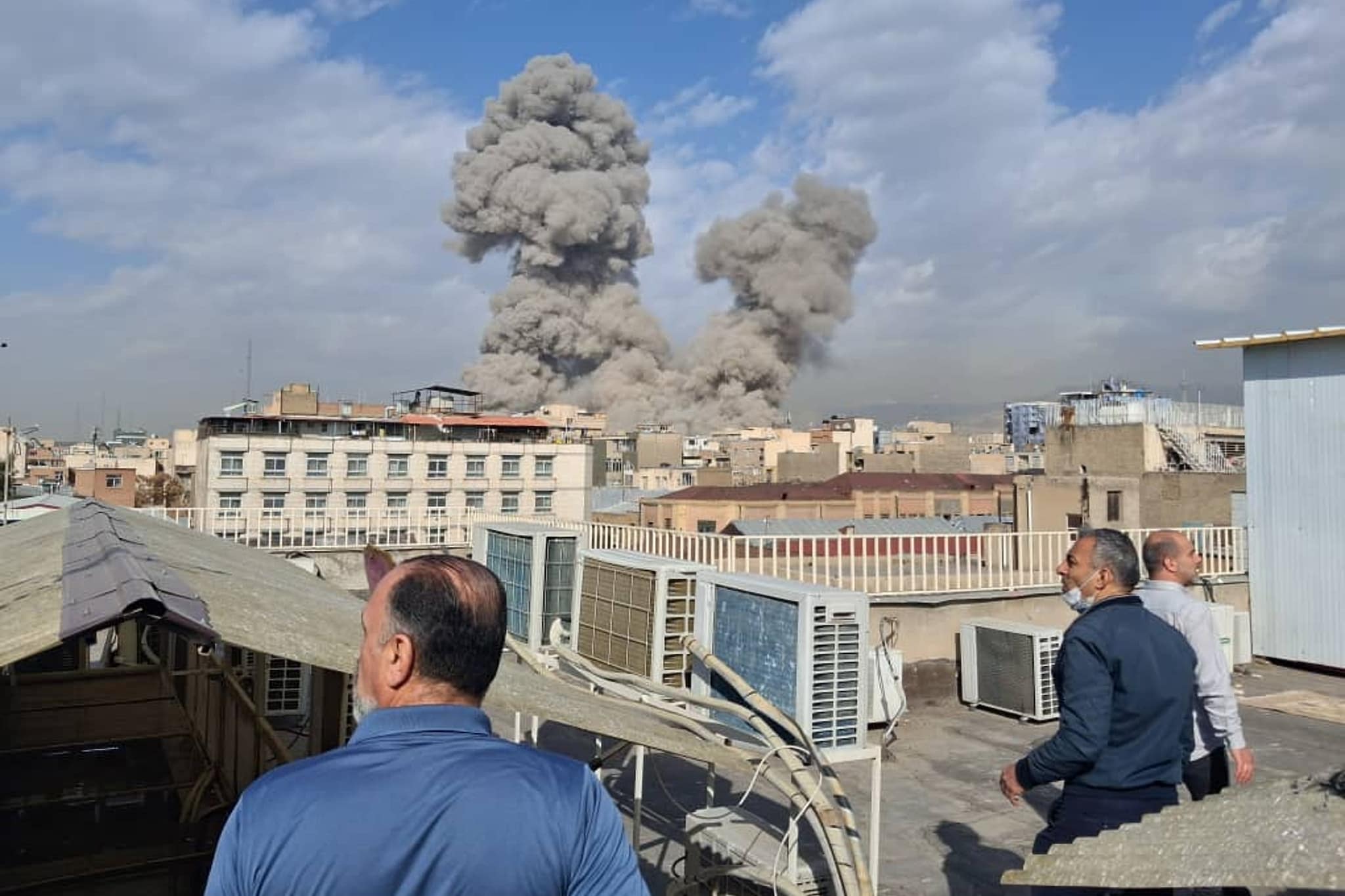
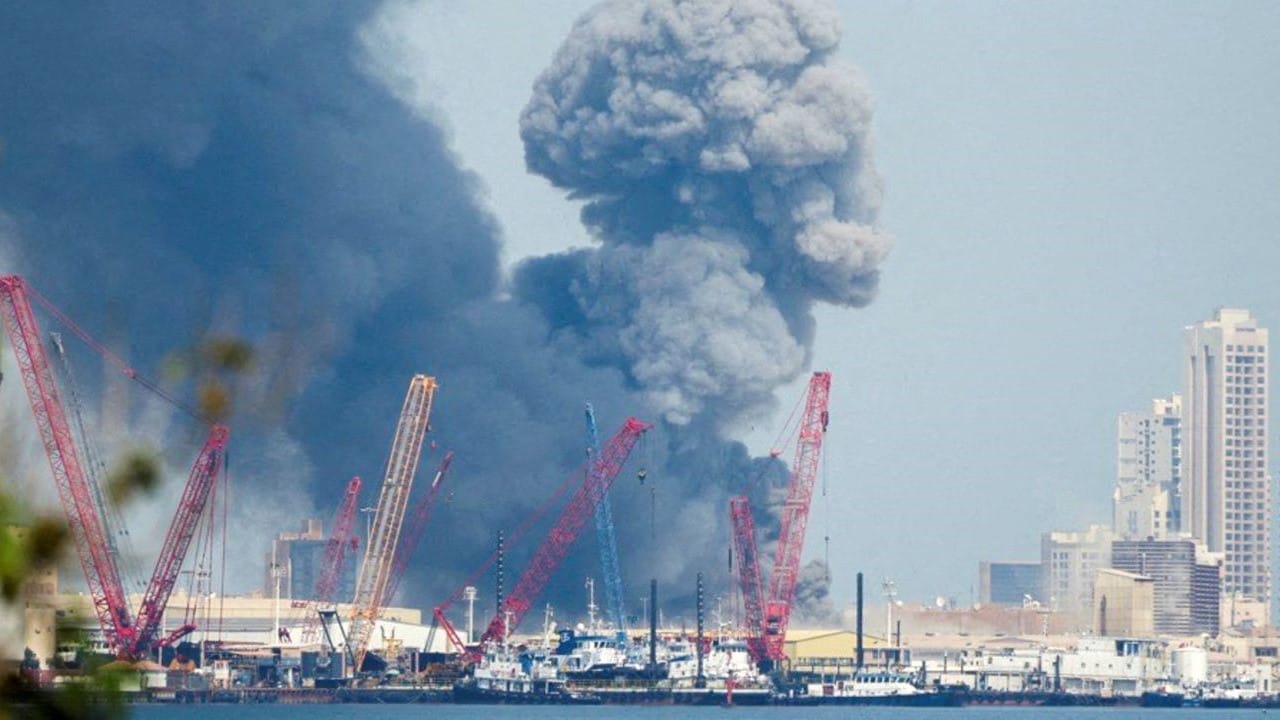
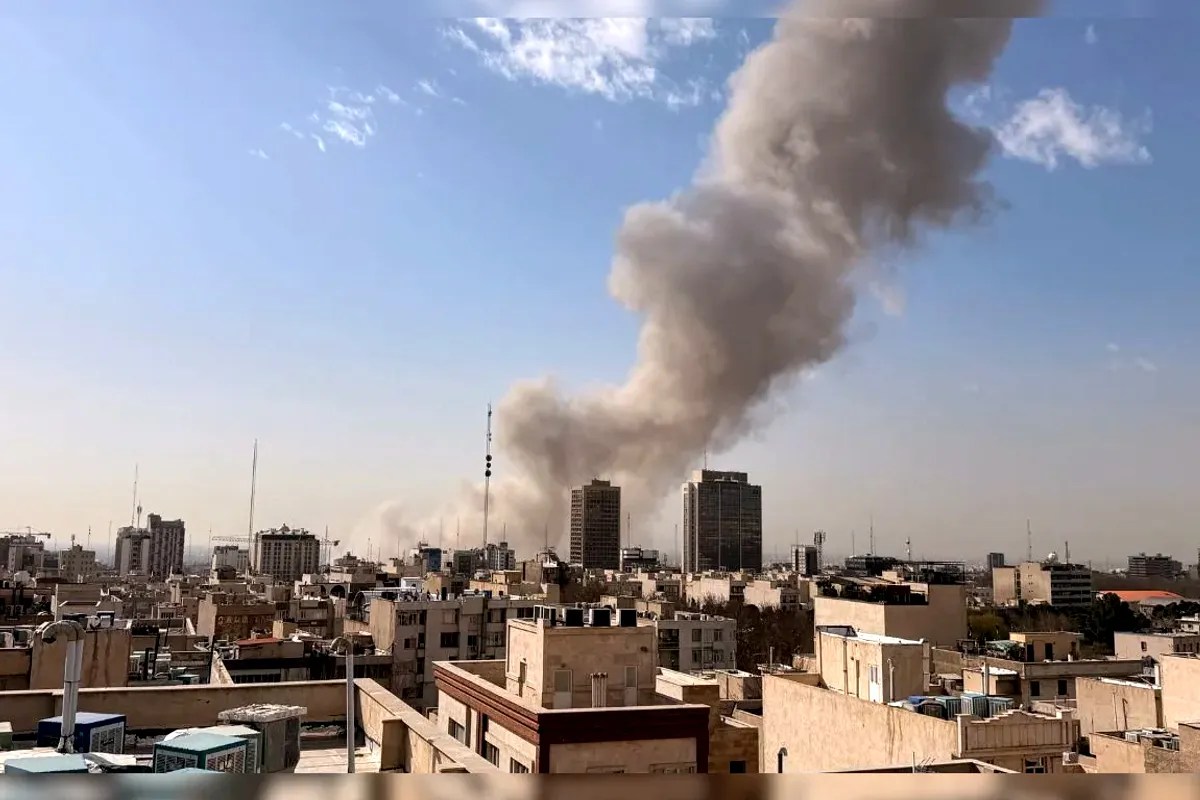
The news alerts arrived like a heartbeat skipping. U.S. and Israeli forces had launched coordinated strikes against targets inside Iran. To the military strategist, these are coordinates on a map, "assets" neutralized, and "capabilities" degraded. To the rest of us, it is the sound of a door slamming shut on a decade of fragile, exhausted peace.
The Sound of the Shift
Imagine a father in a suburb of Tehran. We can call him Arash. He is not a politician. He is a man who worries about the price of eggs and whether his daughter’s laptop will last through another semester of university. When the first explosions rattled the glass in his window frames, the "geopolitical tensions" described in Western newspapers became a physical vibration in his chest.
This is the human cost of a kinetic escalation. It isn't always found in the casualty counts, which are often suppressed or sanitized. It is found in the sudden, frantic checking of WhatsApp groups. It is the way a city holds its breath, waiting to see if the first flash of light was the end of the argument or just the opening sentence.
The strikes targeted military infrastructure, specifically drone production facilities and missile silos. The logic, according to officials, was one of "preemptive restoration of deterrence." In plain English: one side hit so the other side would stop hitting back. But history suggests that deterrence is a ghost. You can never quite be sure you have it until it fails.
The Invisible Architect
Behind these strikes lies a decade of shadow boxing. For years, the conflict between these nations was played out in the dark. It was a war of computer viruses, "unexplained" fires at shipping ports, and whispered assassinations on dusty streets. It was a cold war that stayed just below the boiling point.
That era is over.
When the U.S. joins Israel in a direct, overt kinetic operation against Iranian soil, the mask isn't just slipping; it has been thrown into the fire. We are witnessing the death of the "Shadow War."
Consider the complexity of the machinery involved. To execute a strike of this magnitude, thousands of variables must align. There are the $F-35$ Lightning II jets, ghosts in the radar, screaming through altitudes where the air is too thin to breathe. There are the refueling tankers circling in friendly airspace, the umbilical cords of a modern air campaign. And there are the satellite arrays overhead, watching the heat signatures of a world on fire.
The precision is staggering. We are told that these weapons can hit a specific ventilation shaft from hundreds of miles away. But no matter how "smart" the bomb, the political fallout is always "dumb." It scatters. It hits people who never voted for this. It hits the global economy. It hits the collective psyche of a billion people who just want to know if tomorrow will look like today.
The Price of a Barrel
While the explosions were localized, the shockwaves traveled at the speed of light through fiber-optic cables to the trading floors of London and New York.
Money is a coward. At the first sign of fire, it runs.
The global energy market functions on a thin margin of stability. Iran sits at the throat of the Strait of Hormuz, a narrow strip of water through which twenty percent of the world’s oil flows. When missiles fly, the "risk premium" on a barrel of crude oil spikes. This isn't an abstract financial concept.
It is the reason a delivery driver in Ohio suddenly finds his paycheck doesn't cover his gas. It is the reason a factory in Vietnam slows production because the cost of electricity has become untenable. The strikes in the Middle East are, in a very literal sense, a tax on every human being on the planet. We are all stakeholders in this conflict, whether we want to be or not.
The Weight of the Past
To understand why this happened, we have to look at the scars. Israel views an armed, nuclear-capable Iran as an existential threat—a "never again" moment etched into the national DNA. Iran views the presence of Western powers on its doorstep as a colonial hangover that must be purged at any cost.
Both sides are trapped in a cycle of "rational" escalations.
- Iran provides drones to be used in foreign theaters.
- Israel and the U.S. see this as a red line.
- A strike is launched to "send a message."
- Iran feels compelled to respond to "save face."
It is a ladder where every rung leads higher into a thinner, more dangerous atmosphere. We often talk about these nations as if they are monoliths, but they are composed of factions. In every room where these decisions are made, there is a hawk and there is a pragmatist. For now, the hawks have the floor.
The Ghost in the Machine
We must also talk about the technology that made this possible—and why it’s terrifying. This wasn't a "dogfight" from a cinematic era. This was an algorithmic war.
The U.S. and Israeli forces utilized integrated battle management systems that process millions of data points per second. They use artificial intelligence to identify targets and predict enemy responses. But there is a flaw in the code. AI can calculate the trajectory of a missile, but it cannot calculate the pride of a commander or the grief of a population.
When we remove the human element from the "kill chain," we make war more efficient, but we also make it more likely. If a strike is "clean" and "surgical," the barrier to ordering it becomes lower. We are entering an era where war feels like a video game to those who plan it, even as it remains a nightmare for those who live it.
The Morning After
As the sun rose over the smoking remains of the facilities near Isfahan, the rhetoric began to harden. Official statements were issued. Victories were claimed. Defiance was pledged.
But if you look past the podiums, you see a different story. You see the diplomatic cables flying back and forth between capitals that don't officially talk to each other. You see the back-channel messages through Switzerland and Oman, the frantic attempts to "limit the blowback."
The true danger isn't the strike itself. It is the miscalculation that follows. It is the tired radar operator who sees a civilian airliner and thinks it’s a retaliatory drone. It is the local commander who decides to act without orders because he thinks his country is under total invasion.
The Human Core
We often treat these events as a series of data points in a geopolitical simulation. We talk about "pivot points" and "regional hegemony." But if you strip away the jargon, you are left with something much simpler and much older.
Fear.
The fear of a mother in Tel Aviv as she usher her children into a bomb shelter. The fear of a student in Tehran who wonders if his future just evaporated in a flash of light. The fear of a young soldier on a carrier deck in the Arabian Sea, wondering if he is about to become a footnote in a history book.
The strikes were precise. The targets were military. The objectives were clear. But the world is now a significantly more precarious place than it was twenty-four hours ago. The "Shadow War" has stepped into the light, and the light is blinding.
The smoke eventually clears, and the satellites move on to their next orbit. But for the people on the ground, the silence that follows an explosion is never truly silent. It is filled with the sound of a new, uncertain reality taking root. We are no longer waiting for the spark. The fire is here.
The only question that remains is how much of the world we are willing to let it burn.