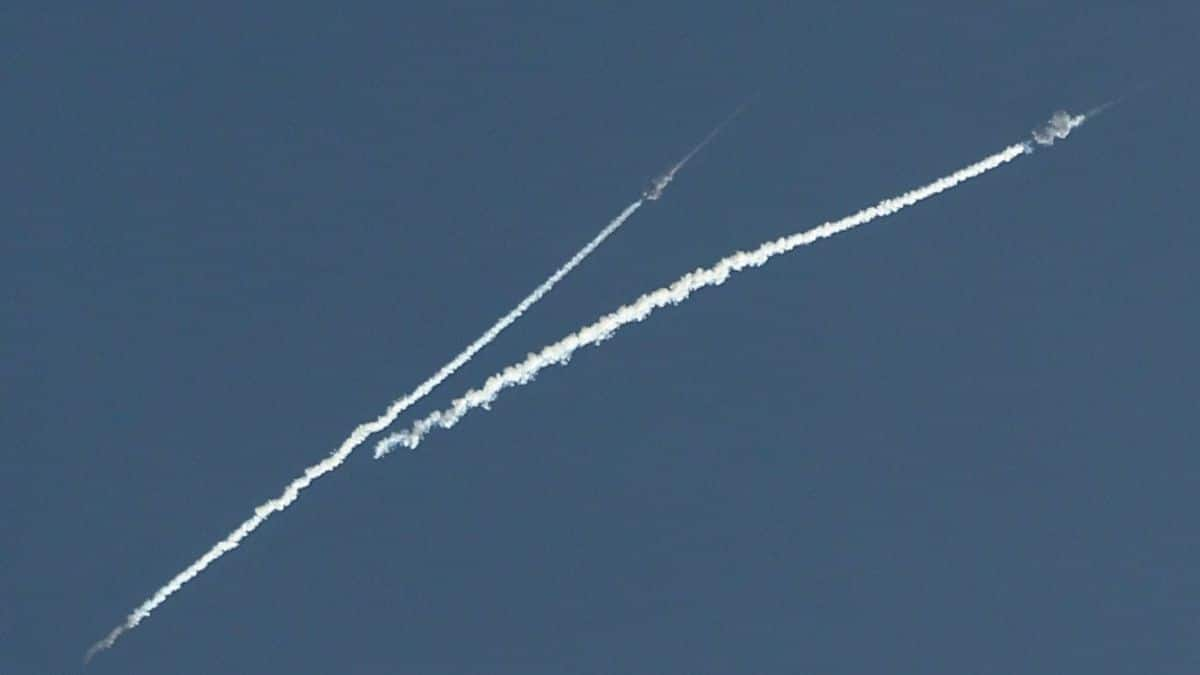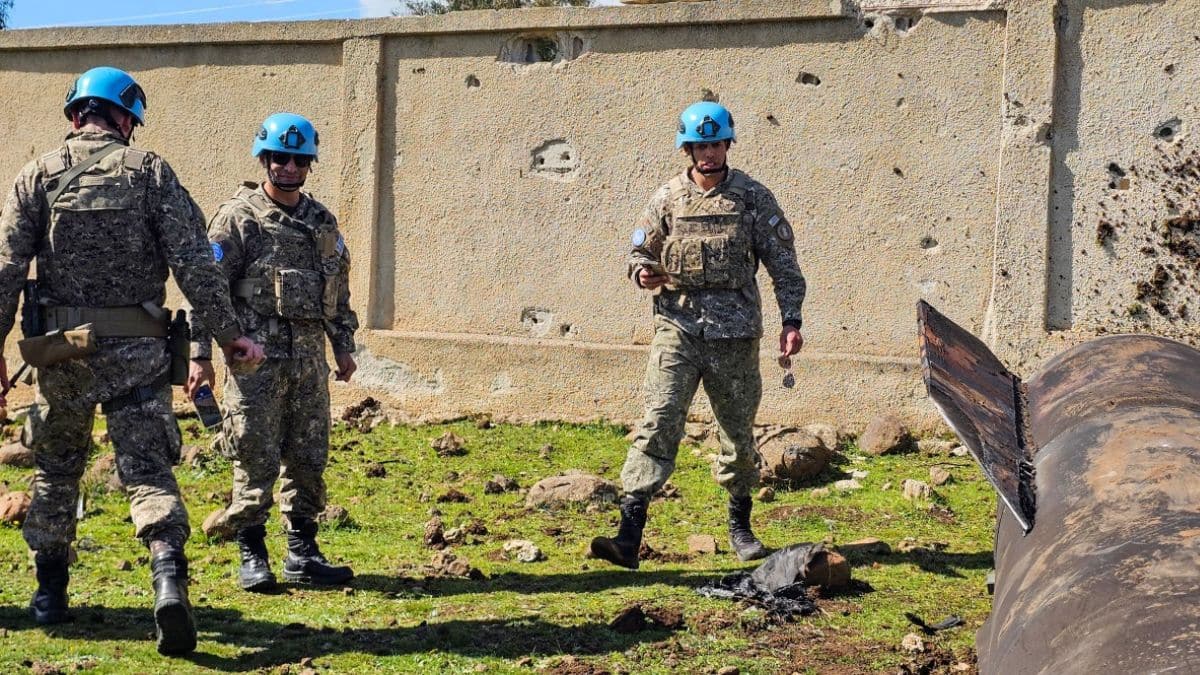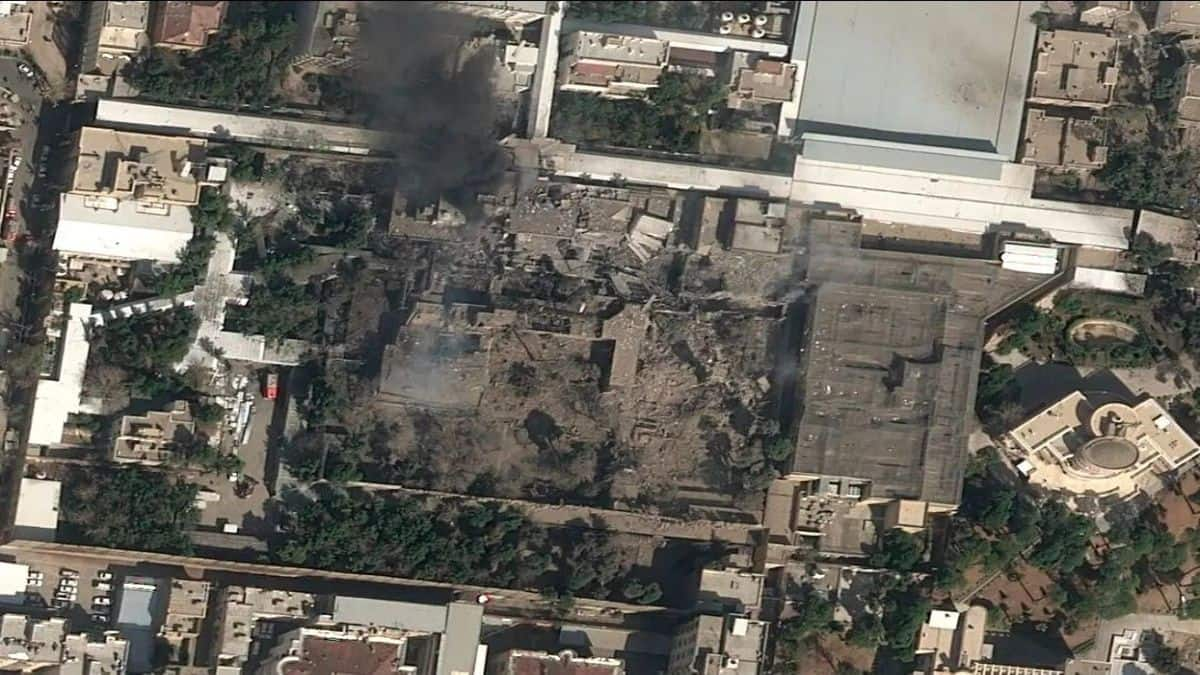
Western intelligence junkies and headline writers are currently obsessed with the architectural layout of the Beit Rahbari. They want to know the depth of the concrete. They want to map the tunnels. They want to speculate on whether Ayatollah Ali Khamenei was whisked away in a specialized elevator while Israeli F-35s or American munitions rattled the windows of Tehran.
They are asking the wrong questions.
The fixation on "escape" or the physical destruction of a leader's office compound reveals a fundamental misunderstanding of how the Islamic Republic of Iran functions. We are witnessing the "Decapitation Delusion"—the naive belief that if you punch a hole in the right roof, the entire revolutionary apparatus collapses. It didn't work in the 20th century, and in the era of decentralized, ideological warfare, it’s an expensive way to achieve absolutely nothing.
The Concrete Fallacy
The media narrative suggests that Khamenei’s survival depends on the thickness of his bunker walls. This is a 1945 mindset applied to a 2026 reality. Iran’s power isn't housed in a single basement in central Tehran. The Beit Rahbari is a symbolic node, not a singular point of failure.
When news outlets talk about "the escape," they imply that the Supreme Leader is a fugitive in his own country. In reality, the Iranian security state—specifically the IRGC’s Ansar-ol-Mahdi Protection Unit—has spent four decades practicing for the day the compound is leveled. To think that hitting the office "destabilizes" the regime is to ignore the fact that the regime is designed to be a distributed network.
If the physical office is destroyed, the authority simply shifts to a mobile command center or a secondary site in Mashhad or Qom. The "office" is an idea, not a zip code.
The Intelligence Trap: Why "Inside Information" is Often Noise
I’ve watched analysts pour over satellite imagery of the Tehran compound for years, looking for fresh tire tracks or new ventilation shafts. They treat it like a puzzle that, once solved, ends the game.
Here is the truth: The more we focus on the "hit," the more we ignore the "succession."
The Western obsession with Khamenei’s physical location actually helps the regime. It creates a "Rally Round the Flag" effect every time a missile gets close. It turns an aging cleric into a defiant martyr-in-waiting. If you want to actually dismantle the Iranian power structure, you don't aim for the bunker. You aim for the shadow economy that funds the IRGC.
Why Decapitation Fails 101
- Redundancy: The Assembly of Experts exists solely to ensure that the "Supreme Leader" is a replaceable component.
- The Martyrdom Complex: In the political theology of the Islamic Republic, a leader killed by a foreign power isn't a loss; it’s an eternal recruitment tool.
- The Bureaucratic Inertia: The Iranian state is a massive, sluggish bureaucracy. It doesn't need a daily signature from the top to continue its regional proxy wars.
The Bunker vs. The Cloud
The competitor articles love to mention the "US and Israeli" involvement in these strikes. They frame it as a masterpiece of coordination. But let’s look at the ROI.
If a $2 million missile hits a $50 million building to kill a man who is 86 years old, who actually won? The man is going to die soon regardless. The ideology, the IRGC’s business empire (Setad), and the ballistic missile program do not live in Khamenei's desk drawer.
We are using 5th-generation kinetic weapons against a 1st-generation ideological problem.
The "Escape" Narrative is a Distraction
Did he escape? Of course he did. Or he wasn't there. Or he was in a tunnel. It doesn't matter.
The rumor that the Supreme Leader "fled" is often planted to make him look cowardly. But to the base that actually keeps the regime in power—the Basij and the hardline IRGC officers—this is just tactical movement. They don't see a coward; they see a commander moving to a hardened position.
By focusing on whether he "escaped," the West signals that it has no better plan than "kill the guy at the top." This is a confession of strategic bankruptcy.
The Real Target is Not Concrete
If you want to disrupt the Iranian status quo, you have to stop looking at the Beit Rahbari.
You have to look at the Bonyads. These are the "charitable" foundations that control up to 20% of Iran’s GDP. They operate with zero transparency and report only to the Supreme Leader. This is where the real power sits. You can't blow up a Bonyad with a JDAM because a Bonyad is a series of ledgers, offshore accounts, and shell companies.
The "Inside his home-office" stories are voyeurism disguised as journalism. They provide a false sense of progress. "We hit the compound!" great. Now, what has changed about the drone shipments to Russia? What has changed about the blockade in the Red Sea?
Nothing.
Stop Asking "Where is He?"
People Also Ask: "Is Khamenei still in Tehran?"
Brutally honest answer: It doesn't matter. Whether he is in a bunker under the Alborz mountains or sitting in his garden, the orders remain the same. The obsession with his location is a relic of 20th-century warfare where capturing the capital meant winning the war. In a world of asymmetrical power, the capital is everywhere.
People Also Ask: "Can Israel's bunker-busters reach him?"
The dismantling: Yes, the physics work. But the politics don't. Killing Khamenei today likely accelerates the transition to a purely military dictatorship under the IRGC, removing the "clerical" veneer that occasionally acts as a pragmatic brake on the more radical elements of the Guard. You might find that the "successor" is far less interested in back-channel diplomacy than the man you just vaporized.
The Cost of the "Win"
Every time we celebrate a strike on a compound, we ignore the collateral damage to our own long-term intelligence. Once you blow up the office, you blow up the bugs, the human sources, and the predictable patterns of communication you spent decades establishing.
I've seen planners get "target fever." They want the big boom. They want the headline. They forget that an alive, predictable enemy is often more manageable than a dead one followed by a chaotic power vacuum.
The Hard Truth
The Beit Rahbari is a distraction. The tunnels are a sideshow. The "escape" is a footnote.
The Iranian regime is a multi-headed hydra of economic interest and religious fervor. You cannot kill an idea with a bunker-buster, and you certainly cannot stop a revolution by hitting its office building.
If the goal is genuine change, stop staring at the satellite maps of Tehran. Start looking at the bank accounts in Dubai, the shipping manifests in the Strait of Hormuz, and the internal fractures between the IRGC and the regular army.
A leader who "escapes" a strike is a leader who is still in control. A leader whose money is frozen and whose proxies are bankrupt is a leader who has nowhere left to run.
The bunker is a coffin, whether it's hit or not. The real war is being fought in the ledgers, and right now, we’re too busy looking at the smoke to notice we’re losing the math.
Stop cheering for the explosion and start asking why the system behind the building is still standing perfectly still.