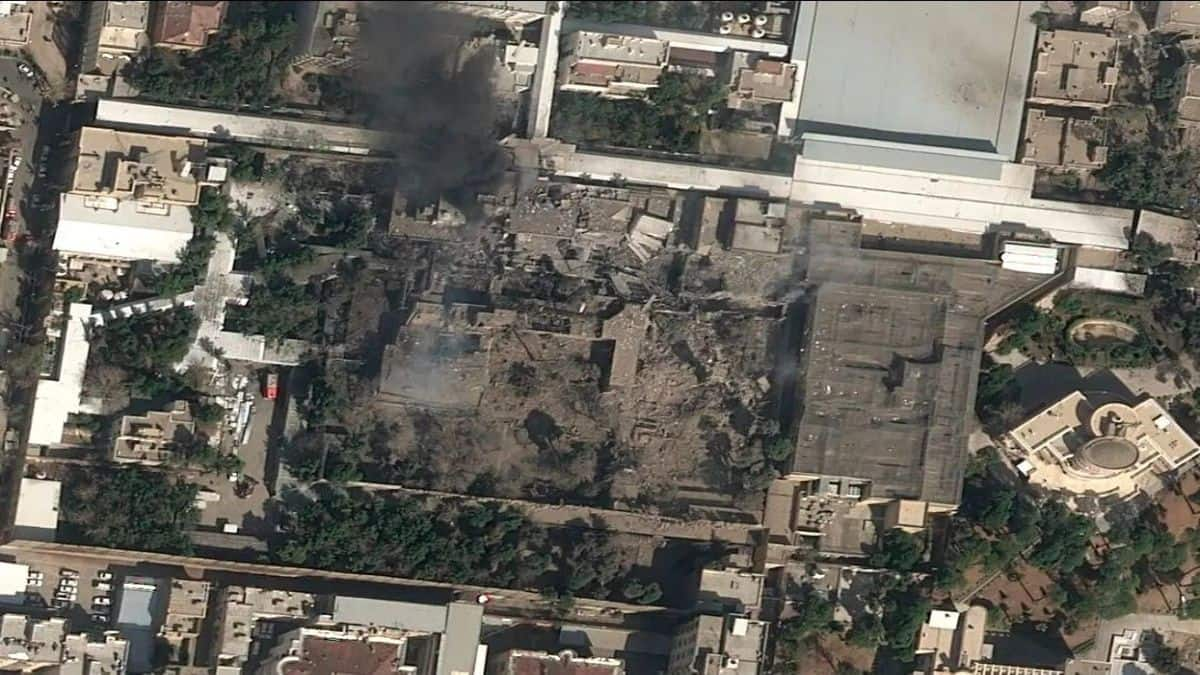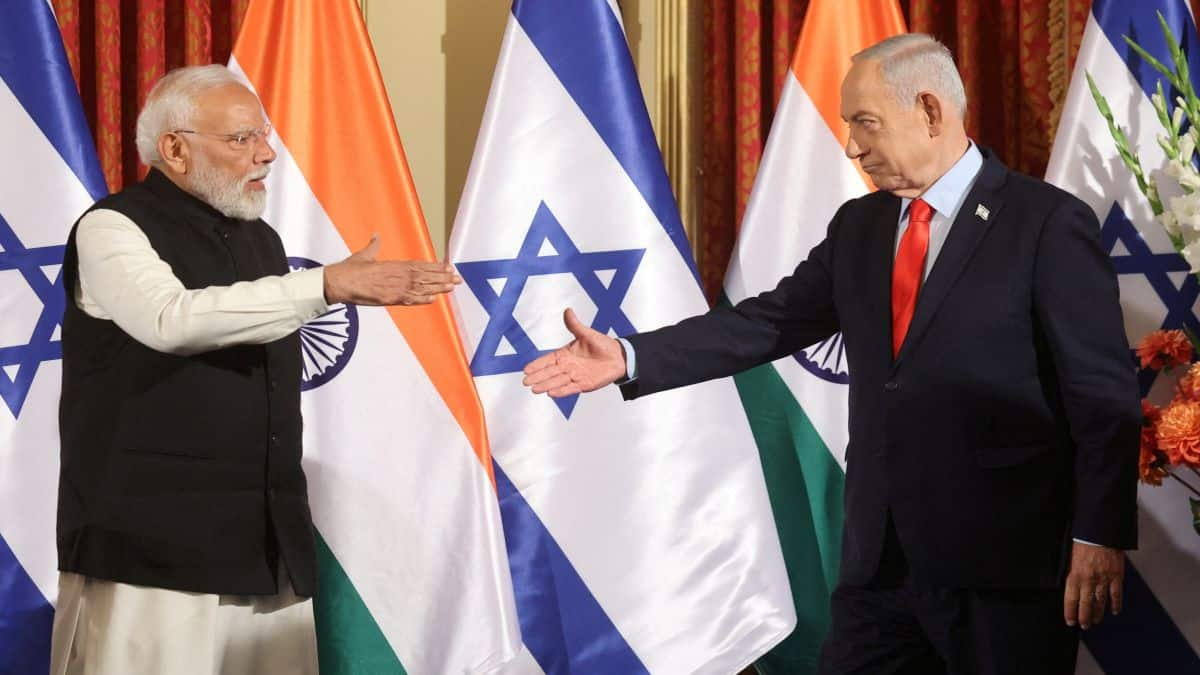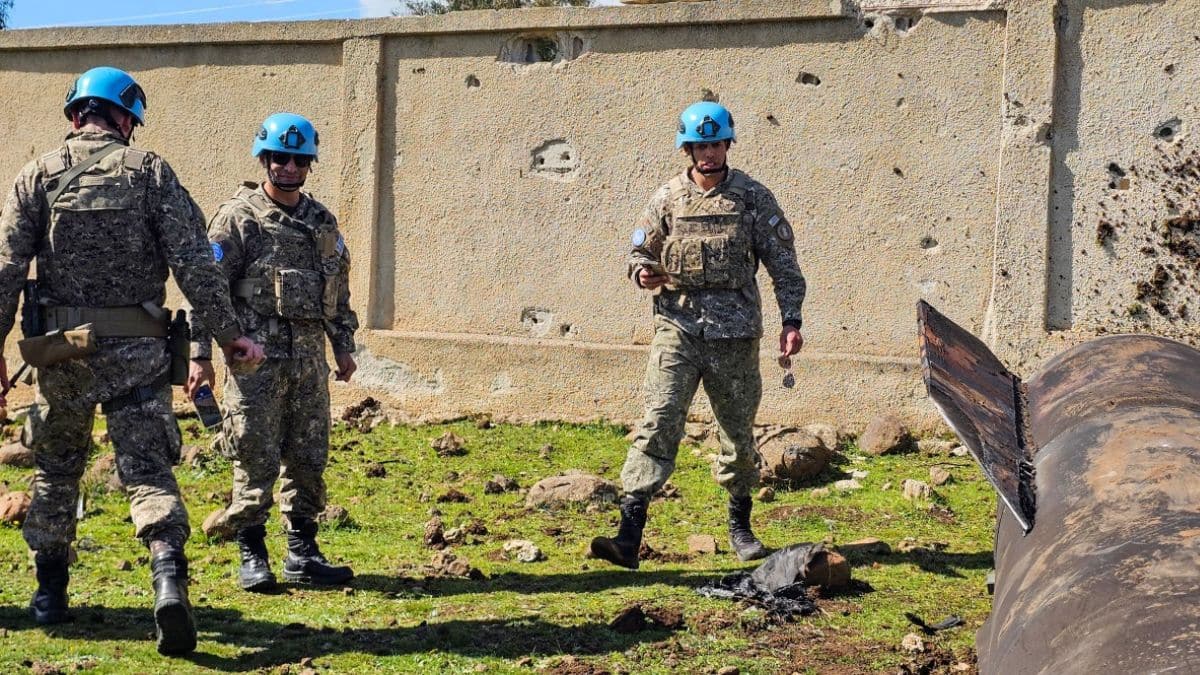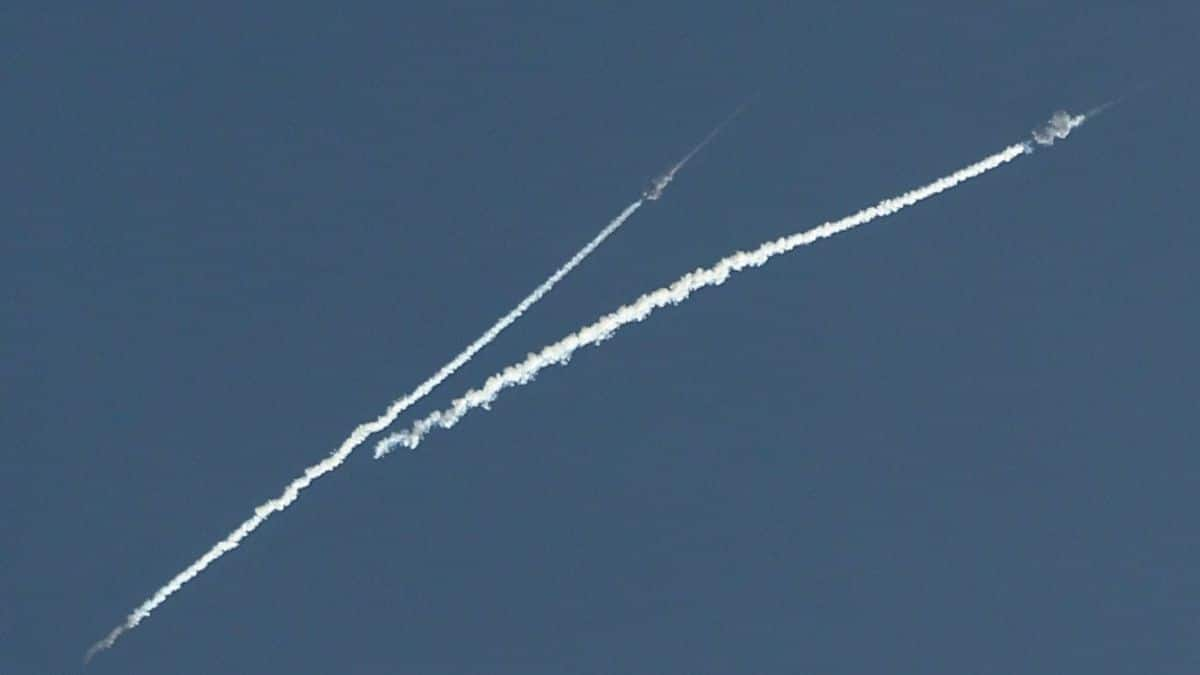
The headlines are screaming about "Operation Epic Fury." Pundits are dusting off their 1914 history books, trembling over maps of the Strait of Hormuz, and breathlessly asking if we are on the precipice of a global conflagration. They want you to believe that a US-Israel kinetic strike on Iranian soil is the first domino in a sequence that ends with mushroom clouds over London or tanks rolling through the Suwalki Gap.
They are wrong. They are not just wrong; they are commercially incentivized to be wrong.
The "World War 3" narrative is the ultimate lazy consensus. It relies on a fundamental misunderstanding of 21st-century power dynamics, the logistics of modern attrition, and the cold, hard math of integrated global markets. We are not living through the prelude to a global war. We are witnessing the refinement of "The New Containment"—a high-stakes, surgical, and deeply calculated game of brinkmanship where the primary goal is specifically to avoid the very total war everyone claims is inevitable.
The Logistics of the Impossible
To have a World War, you need blocks. You need a cohesive "Axis" capable of sustained, high-intensity industrial warfare across multiple theaters. The current fear-mongering suggests a Tehran-Moscow-Beijing axis is ready to burn the world down.
Let’s look at the balance sheets.
Russia is currently bogged down in a localized, grinding war of attrition in Ukraine that has laid bare the hollowed-out nature of its conventional logistics. Iran, despite its sophisticated drone programs and proxy networks, lacks the blue-water navy or the heavy expeditionary force required to project power beyond its immediate neighbors. China, the only true peer competitor, is currently navigating a demographic collapse and a fragile real estate market that would disintegrate the moment global maritime trade—the very thing they rely on for survival—is severed.
A World War requires partners to commit suicide for one another. Does anyone honestly believe Xi Jinping is going to risk the total collapse of the Chinese middle class to avenge a strike on an Iranian enrichment facility?
In my years analyzing supply chain vulnerability and geopolitical risk, I’ve seen boards of directors panic over "black swan" events that were actually "gray rhinos"—obvious, slow-moving realities. The reality here is that the global economy is too deeply intertwined for a 1940s-style total war. We have replaced the "Balance of Power" with a "Balance of Mutual Financial Destruction."
Operation Epic Fury is a Controlled Burn
The media portrays strikes on Iran as a reckless "trigger." In reality, these operations are the ultimate expression of control.
Modern precision warfare, powered by real-time signals intelligence and $GPS$ guided munitions, allows for a level of escalation management that was impossible thirty years ago. When the US and Israel coordinate a strike, they aren't swinging a sledgehammer in a dark room. They are performing a lobotomy.
The goal isn't to topple the regime—regime change is a messy, expensive relic of the early 2000s that the Pentagon has no appetite for. The goal is "Degradation without Destabilization." You take out the centrifuges, you silence the radar arrays, and you leave enough of the leadership intact so there is still someone to answer the phone when the de-escalation calls start.
The Myth of the "Symmetric Response"
The most common counter-argument is that Iran must respond, and that response must lead to escalation. This is "People Also Ask" logic at its worst.
"Will Iran close the Strait of Hormuz?"
If they do, they starve. Iran’s economy is a gas station. You don't burn down your only exit to the market. Furthermore, the US Fifth Fleet exists specifically to ensure that any attempt to mine the Strait results in the total evaporation of the Iranian Navy within 72 hours. Tehran knows this."What about the proxies?"
Hezbollah and the Houthis are irritants, not existential threats. They are tools for asymmetrical leverage, used to raise the "cost of doing business" for the West. They are not, however, capable of winning a conventional war. They are the noise, not the signal.
The Intelligence Gap: Why You’re Being Fed Garbage
The "World War 3" narrative persists because it sells subscriptions. Fear is a high-margin product.
I’ve sat in rooms where "unnamed officials" brief the press. They don't give the press the nuanced, probabilistic assessments used by actual decision-makers. They give them the "worst-case scenario" because it serves as a deterrent. If the public is terrified of a global war, it gives the administration more political cover to engage in "limited" strikes as a "necessary preventive measure."
It’s a classic bait-and-switch. By framing the options as "Total War" or "Nothing," the proponents of intervention make a series of massive, violent strikes look like the "moderate" middle ground.
The Real Risk is Not War, but Irrelevance
The contrarian truth is that the US and Israel aren't worried about World War 3. They are worried about the loss of the Unipolar Moment.
The strikes are a desperate attempt to prove that the old rules still apply—that the "West" can still project power with impunity. But the very fact that these strikes are necessary proves the opposite. We are moving toward a fractured, multipolar world where regional powers ignore the "International Community" and act in their own brutal self-interest.
This isn't a world war. It’s a world of a thousand small, bloody, localized shakedowns.
Imagine a scenario where the US hits Iran, and instead of a global war, the world just... moves on. Oil prices spike for a week, then stabilize as Saudi Arabia increases production to grab market share. China issues a "strongly worded" statement while signing a new trade deal with the UAE. The UN meets, talks, and achieves nothing.
That is the future. Not a cinematic apocalypse, but a messy, grinding, permanent state of low-level conflict that never quite boils over into the "Big One."
Stop Prepping for 1939
If you are managing risk—whether for a multi-billion dollar fund or your own family—stop looking for a global "flashpoint."
The danger isn't a single event that triggers a world war. The danger is the "Death by a Thousand Cuts" to the global trade system.
- De-dollarization is a bigger threat to US hegemony than an Iranian missile.
- Cyber-fragility in the banking sector is more dangerous than a skirmish in the Levant.
- Internal domestic instability in Western capitals is the real "Epic Fury."
The competitor article wants you to look at the explosions in the sky. I’m telling you to look at the cracks in the foundation.
World War 3 is a ghost story told by people who still think the 20th century is happening. We have moved past the era of the "Great War" into the era of the "Great Friction." It’s uglier, more complicated, and significantly harder to put on a catchy news graphic.
Get used to the friction. It's the only thing that's real.
The missiles will fly. The smoke will rise. And tomorrow, the markets will open at 9:30 AM, just like they always do. The world isn't ending; it's just becoming more expensive to ignore.
Stop waiting for the big bang. The whimper has already started.