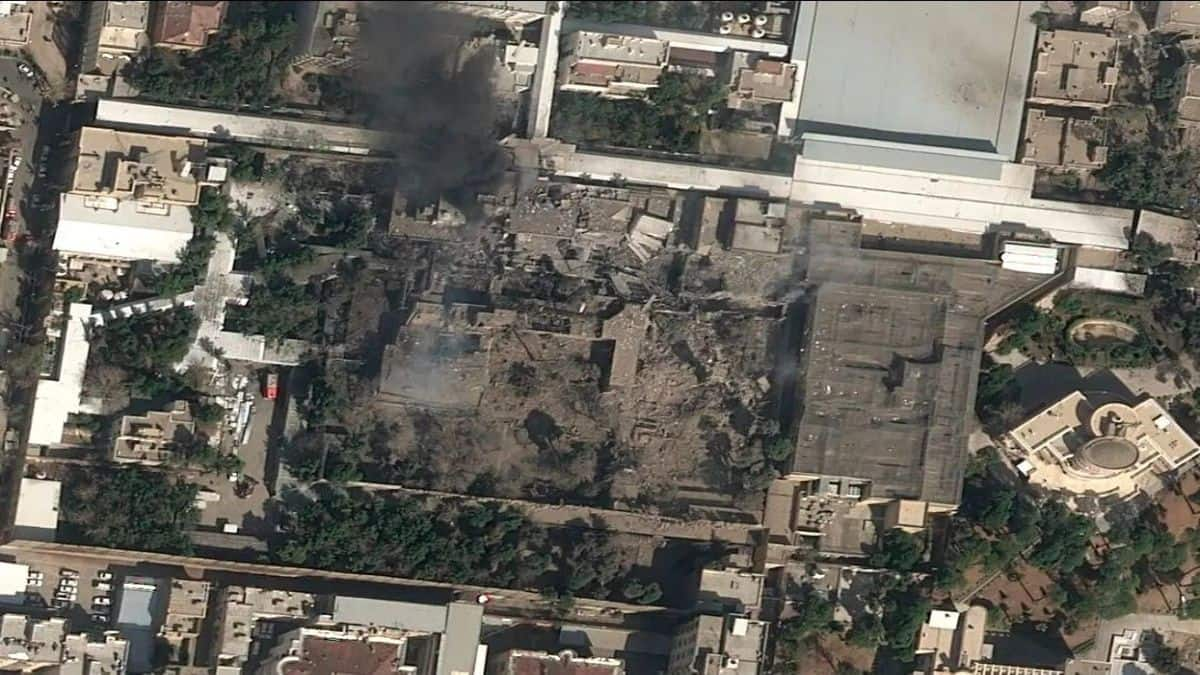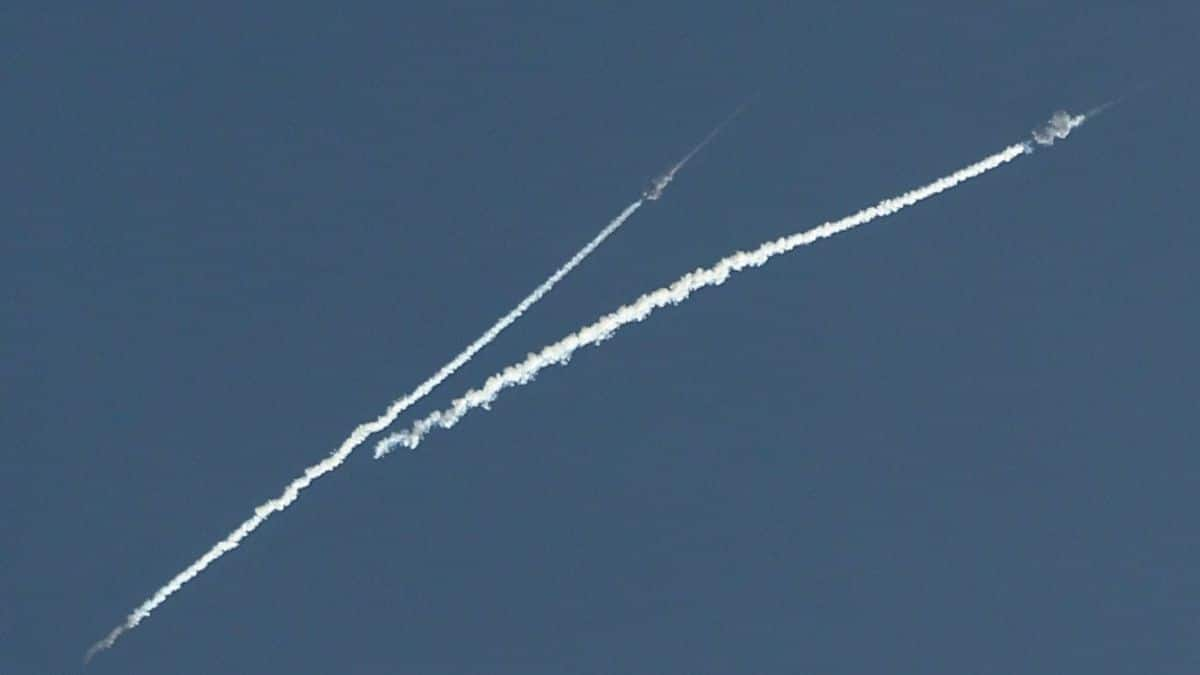
The recent surge in US and Israeli strikes against Iranian assets across the Middle East is being sold to the public as a calculated campaign of deterrence. It is nothing of the sort. Behind the high-resolution satellite imagery and the surgical precision of the munitions lies a frantic, reactive policy dictated by the collapse of long-term regional stability. These strikes are not the opening moves of a master chess player. They are the reflexive swings of a heavyweight fighter who has been backed into a corner and can no longer see his opponent's hands.
The primary driver here is a profound sense of desperation. For decades, the United States and Israel relied on a specific brand of military superiority to keep Tehran’s ambitions in a box. That box has shattered. Iran’s "Axis of Resistance"—a sophisticated network of proxies and partners—has achieved a level of integration that traditional air power can no longer dismantle. When Washington or Tel Aviv launches a sortie today, they aren't just hitting a warehouse; they are trying to signal a strength they no longer feel they possess on the ground.
The Illusion of Deterrence
Deterrence only works if the target believes that the cost of action outweighs the benefit. For Iran, that math has shifted permanently. Every strike on a Lebanese supply line or a Syrian research facility provides Tehran with a live-fire laboratory to test the resilience of its logistics. The more the US and Israel strike, the more they reveal the limitations of their reach.
Military analysts often mistake activity for progress. They point to "degraded capabilities" and "disrupted command structures." But these are temporary metrics. On a strategic level, the frequency of these attacks suggests that the initial "red lines" have become meaningless. If you have to bomb the same corridor every three weeks, you haven't deterred your enemy. You have merely become a predictable part of their operational environment.
The Missile Gap and the Drone Revolution
The technical reality of the conflict has outpaced the political rhetoric. Israel’s Iron Dome and the US-led regional defense architectures are marvels of engineering, but they face a math problem they cannot win. Iran has mastered the art of the "saturation attack," using low-cost loitering munitions and ballistic missiles to overwhelm expensive interceptors.
It costs a few thousand dollars to build a drone. It costs millions to shoot one down. This asymmetry is the engine of Western desperation. The US and Israel are forced to play an exhausting game of "whack-a-mole" where the "moles" are increasingly sophisticated and capable of hitting critical infrastructure, from desalination plants to offshore gas rigs. The strikes we see now are a desperate attempt to destroy these systems at the source because stopping them in the air is becoming economically and logistically unsustainable.
The Intelligence Failure of the Century
There is a deeper, quieter crisis unfolding in the intelligence community. For years, the working assumption was that economic sanctions would eventually force Iran to the negotiating table or trigger an internal collapse. Neither happened. Instead, Iran leveraged its isolation to build a self-sufficient defense industry and a "shadow economy" that bypasses Western financial systems.
The current wave of strikes is an admission that the economic war has failed. When the treasury department runs out of targets, the pentagon is called in to fill the void. This transition from "maximum pressure" via bank accounts to "maximum pressure" via MK-84 bombs is a downgrade, not an escalation of strategy. It signals that the West has lost its non-kinetic levers of influence.
The Myth of Surgical Precision
Politicians love the phrase "surgical strikes." It implies a clean, clinical removal of a problem with no side effects. In the reality of Middle Eastern geopolitics, there is no such thing as a clean cut. Each strike carries a political cost that fuels the very insurgency it seeks to suppress.
- Radicalization: Every drone strike that results in "collateral damage" becomes a recruiting poster for regional militias.
- Diplomatic Erosion: Regional partners, such as Jordan and the UAE, are increasingly wary of being caught in the crossfire of a hot war they didn't ask for.
- Iranian Hardening: Within the Iranian power structure, the strikes empower the hardliners who argue that diplomacy with the West is a fool's errand.
The Domestic Pressure Cooker
In both Washington and Jerusalem, domestic politics are driving military decisions. An embattled Israeli government, facing internal fractures and a relentless protest movement, finds a perverse kind of unity in the "Iranian threat." It is the one issue that can silence the opposition, if only temporarily.
Similarly, US administrations are terrified of looking "weak on Iran" during an election cycle. The result is a policy of "performative kineticism." These strikes are designed as much for the evening news in the US as they are for the military headquarters in Tehran. When a missile hits a target, it provides a 24-hour news cycle of perceived strength, masking the fact that the underlying regional policy is in total disarray.
The Red Sea Trap
The situation in the Red Sea serves as a perfect microcosm of this desperation. A non-state actor like the Houthis has managed to disrupt global shipping despite being the target of repeated US-led bombing campaigns. The US Navy, the most powerful maritime force in human history, is finding it difficult to protect commercial vessels from improvised weapons.
This isn't a failure of bravery or technology. It is a failure of imagination. The US is applying 20th-century solutions—massive carrier groups and heavy bombers—to a 21st-century problem of decentralized, asymmetric warfare. The desperation comes from the realization that even if the US bombs every launch site in Yemen, the knowledge and the motivation to build more drones will remain. You cannot bomb an ideology, and you certainly cannot bomb a supply chain that exists in a thousand small workshops spread across a rugged landscape.
The Nuclear Ghost
Hovering over all of this is the Iranian nuclear program. The strikes are often framed as a way to "message" Iran to stop its enrichment activities. In reality, they are doing the opposite. By demonstrating that Iran is a target of constant conventional attack, the West is inadvertently making the strongest possible case for an Iranian nuclear deterrent.
If you are a strategist in Tehran watching your neighbors and your proxies get bombed with impunity, the logic of "going nuclear" becomes incredibly seductive. It is the ultimate insurance policy. The more desperate the US and Israel appear in their conventional strikes, the more they signal that they are afraid of what Iran will become, which only accelerates Tehran's march toward that very outcome.
The Inevitability of Miscalculation
When you operate out of desperation, your margin for error disappears. A single missile that goes off course and hits a high-profile civilian target or a foreign embassy could ignite a regional conflagration that no one—not even the most hawkish generals—is prepared for.
The current cycle of strikes is essentially a high-stakes gamble. The US and Israel are betting that they can stay "below the threshold" of a full-scale war while dealing enough damage to save face. It is a fragile equilibrium maintained by luck more than by design.
Moving Beyond the Kinetic Loop
If the goal is genuine stability, the current path is a dead end. Doubling down on a failing strategy only ensures a more violent collapse later. The hard truth that no one in power wants to admit is that the military option has reached its point of diminishing returns.
The focus must shift from trying to destroy the "Axis of Resistance" to understanding the grievances and the power dynamics that allow it to flourish. This isn't about appeasement; it's about a cold-blooded assessment of what is actually achievable. Continuing to launch strikes without a coherent political objective is not a strategy. It is an expensive, dangerous habit.
The next time a spokesperson stands behind a podium to announce a "successful" strike against an Iranian-linked target, look past the jargon. Look for the exit strategy. Look for the long-term plan for regional integration. You won't find one. You will only find the frantic movements of a policy that has run out of ideas and is now relying on the sound of explosions to drown out the silence of its own failure.
The only way out is to stop treating the Middle East as a target range and start treating it as a complex political reality that cannot be solved with a laser-guided bomb. Until that happens, the cycle of desperation will continue, and the strikes will get louder as their effectiveness gets smaller.
Monitor the flight paths of the next carrier strike group; they will tell you exactly how little the strategy has changed and how much the desperation has grown.