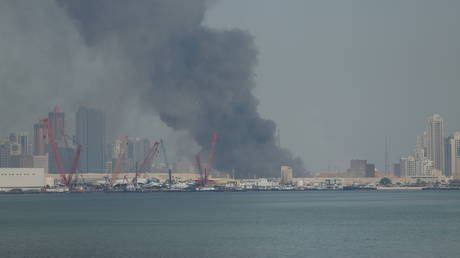
Military conflict in the Middle East isn't just fought with drones and missiles. It’s fought with press releases. When Tehran claims that 200 US troops were killed or wounded in a retaliatory strike, you're seeing a specific brand of psychological warfare that's been refined over decades. It's a numbers game where the math rarely adds up, but the impact on local morale is exactly what the Iranian leadership wants.
If you're looking for a body count that matches Western media reports, you won't find it here. The gap between what the Islamic Revolutionary Guard Corps (IRGC) reports and what the Pentagon confirms is often massive. This isn't just a simple disagreement over facts. It’s a fundamental clash between two different ways of managing public perception during a crisis.
The Strategy Behind the 200 Casualty Narrative
Tehran’s state-run media outlets, including Fars News and Tasnim, have a history of releasing specific, high casualty counts immediately following any US-led operation. They do this for a few reasons. First, it projects strength to a domestic audience. If the IRGC can convince the Iranian public that they've struck a significant blow against "the Great Satan," it justifies the risks they take on the international stage.
Second, these numbers are designed to create doubt within the US and among its allies. Even if the Pentagon issues a total denial, the mere mention of 200 casualties starts a conversation. It forces US officials to spend their time debunking claims rather than focusing on their own strategic goals. It’s a classic "flooding the zone" tactic.
Comparing State Media Claims with Satellite Reality
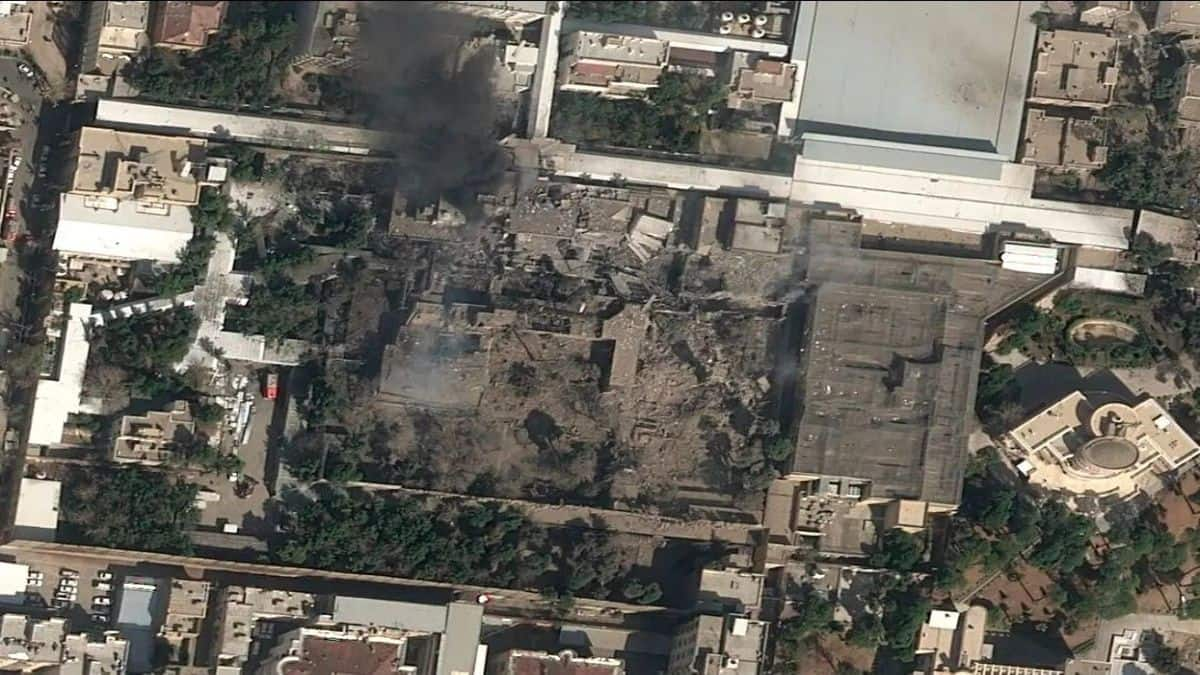
When these strikes happen, we don't have to rely on what government spokespeople say. We have eyes in the sky. Open-source intelligence (OSINT) analysts use commercial satellite imagery from companies like Maxar and Planet Labs to see exactly what happened on the ground.
Take the 2020 ballistic missile attack on Al-Asad Airbase as a prime example. Tehran claimed dozens of Americans died. The US initially claimed zero casualties, later updating that to over 100 cases of traumatic brain injury (TBI). While the TBIs were serious, the "200 dead" narrative pushed by some regional outlets was physically impossible based on the craters visible in the photos. The missiles hit storage hangars and runways, not the barracks where the troops were bunkered down.
Understanding this discrepancy is vital. If a missile hits a concrete slab, it doesn't matter how loud the explosion is; it’s not killing 200 people. The IRGC knows this. They also know that most people scrolling through social media won't check the satellite coordinates. They’ll just remember the headline.
Why Information Gaps Happen During Retaliatory Strikes
You've probably noticed that the US military is often slow to release its own casualty numbers. This lag time is the "golden hour" for Iranian propaganda. While the Pentagon is busy notifying next of kin and verifying medical reports—a process that can take 24 to 48 hours—Tehran is already blasting its version of events across every Telegram channel in the region.
- Verification protocols: The US military has a strict process for reporting injuries. They don't count a "concussion" as a casualty in the same way they count a shrapnel wound initially.
- Strategic silence: Sometimes, the US chooses not to report minor injuries to avoid giving the enemy "Battle Damage Assessment" (BDA) data. If you tell the guy who shot at you that he missed by ten feet, he'll just aim better next time.
- Proxies and local forces: Often, the "US casualties" Tehran mentions are actually local partner forces or contractors. By blurring the lines between a US soldier and a local security guard, Tehran can inflate the perceived success of their strikes.
The Role of Psychological Operations in Modern Warfare
Warfare in 2026 is as much about the "narrative" as it is about the hardware. Iran’s media apparatus isn't trying to win a Pulitzer Prize for accuracy. They’re trying to win the "street" in Baghdad, Beirut, and Damascus. When a headline says 200 Americans are down, it serves as a recruitment tool for proxy groups like Hezbollah or Kata'ib Hezbollah.
It also puts pressure on US politicians. High casualty counts—even fake ones—trigger debates in Washington about whether the military presence in the Middle East is worth the cost. Tehran plays the US political cycle like a piano. They know that the American public has very little appetite for another long-term conflict with high troop losses.
Spotting the Red Flags in State-Run Reports
You can usually tell when a casualty report is inflated by looking for a few specific markers. If the report comes out within 30 minutes of the strike, it’s almost certainly fake. It takes hours to clear rubble and account for personnel. If the report uses "unnamed sources" from within the IRGC without providing any photo evidence of the actual damage, be skeptical.
Another red flag is the use of "round numbers." Real combat is messy. You get 14 injuries, 3 deaths, and 2 missing. You rarely get exactly "200 casualties." That’s a number chosen for its rhetorical weight, not its mathematical accuracy.
How to Track Real Developments
If you want the truth during these escalations, you have to look at multiple streams of data. Don't just follow one news outlet.
- Check OSINT accounts on X (formerly Twitter): Look for accounts that post verified satellite imagery and flight tracking data. If medical evacuation planes (like the C-17 Globemaster) aren't flying toward Landstuhl in Germany, there probably aren't hundreds of casualties.
- Watch the markets: Defense stocks and oil prices usually react more to reality than to propaganda. If Tehran claims 200 dead and the markets don't move, the "smart money" isn't buying the story.
- Wait for the BDA: Battle Damage Assessments from independent think tanks like the Institute for the Study of War (ISW) are far more reliable than immediate state media reports.
Relying on state-run media for casualty counts in a conflict zone is like asking a football coach for an unbiased opinion on a referee's call. They have too much skin in the game to be objective. Stick to the hard data, look at the satellite frames, and remember that in the Middle East, the first casualty of any retaliatory strike is always the truth.
Stop taking these headlines at face value. Instead, start tracking the movements of medical transport aircraft and wait for the high-resolution imagery to drop. That’s where the real story lives.